• English
  • 简体中文
  • 繁體中文
  • Tiếng Việt
  • ไทย
  • Indonesia
Subscribe
Real-time News
On July 15th, the Peoples Bank of China released data showing that at the end of June, outstanding RMB loans reached 282.63 trillion yuan, a year-on-year increase of 5.2%. Experts analyze that my country is currently in a critical stage of deep industrial restructuring and the transformation of growth drivers. The slowdown in loan growth does not signify a weakening of financial support, but rather a natural result of the financial system adapting to economic transformation and upgrading, and a necessary process for high-quality financial development. Looking at a longer timeframe, for many years, my countrys social financing structure has been dominated by loans. However, with the rapid development of the financial market, in 2025, the increase in bond and equity financing exceeded the increase in loans for the first time, becoming the core supporting force for financing supply. Experts believe that this trend will continue in the long term, and a diversified financing system will continue to provide strong and effective financial support for the real economy.On July 15th, Derek Halpenny of MUFG Bank stated in a report that the Canadian dollar could fall if the Bank of Canada dampens expectations of a rate hike this year in its policy decision. He suggested the Bank of Canada might signal that it will maintain current interest rates, thus refuting market pricing in a rate hike before the end of the year. He believes Bank of Canada Governor Macklem might acknowledge the risk of rising inflation due to the Iran conflict, but given the currently relatively mild underlying inflation, he might also hint at room to wait. Halpenny added that trade uncertainty and increased stock market volatility due to concerns about AI could also weigh on the Canadian dollar.On July 15th, European Central Bank staff noted in an article that geopolitical uncertainty has led to decreased loan demand from Eurozone companies exporting to the US, and credit conditions have become more stringent. Economists Petra Köhler-Ulbrich and others wrote on Wednesday that European automakers are among the hardest hit by tariffs and are now facing stricter credit standards, further exacerbating their existing structural problems. They stated that in other cases, banks have maintained credit conditions but strengthened monitoring of relevant companies. They believe the impact of trade tensions on credit conditions will peak between April and October 2025. The economists wrote, “This impact diminishes later in the year as trade sentiment improves with the initial trade framework agreement reached between the US and the EU in the summer, coupled with easing policy uncertainty.” The article did not mention the recent tensions stemming from the US-Iran conflict but highlighted the challenges this risk poses to economies struggling to revive growth. Policymakers are weighing this threat against inflation risks and preparing for next weeks interest rate decision.Ukraines Defense Minister: Ukraine has signed an agreement to gain access to the EUs defense program and receive €300 million in new funding.Iraqi Shiite militia groups: The United States will not succeed in conquering Iraq, nor will it succeed in continuing to steal its oil and resources, whether through direct theft or dubious investment.

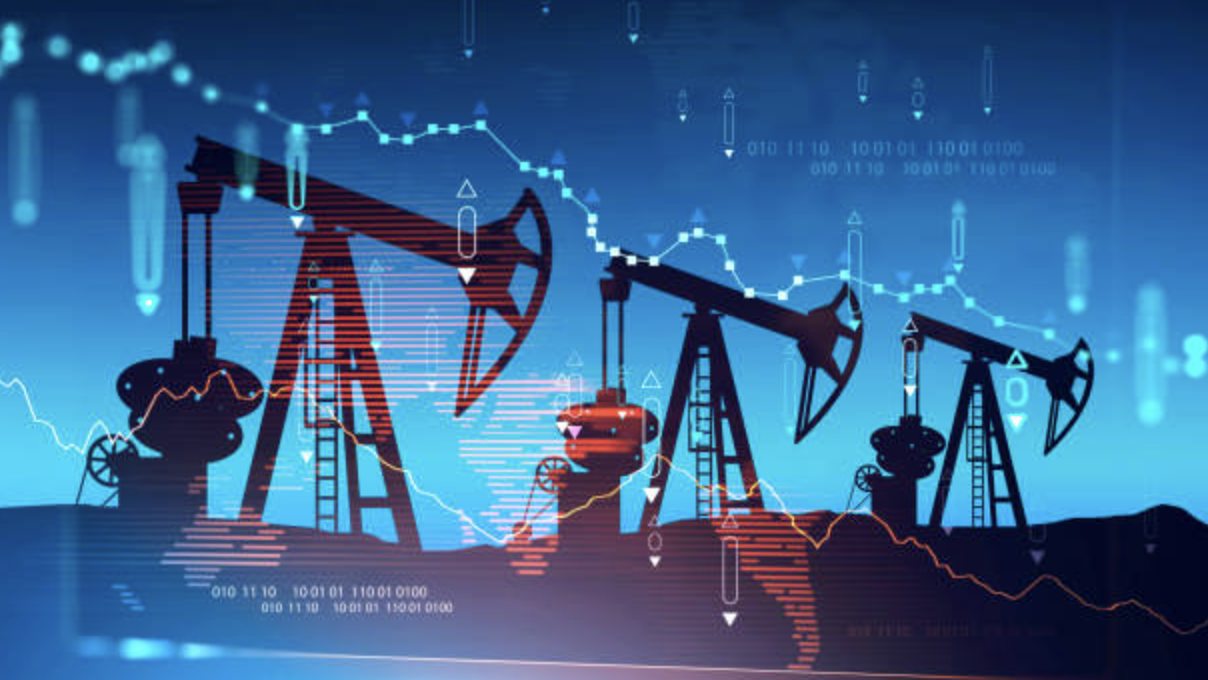
WTI bears are exerting pressure on bulls below crucial resistance; a breach of $84.70 is likely

Daniel Rogers

Nov 17, 2022 11:39

 101.png


West Texas Intermediate (WTI) is approximately flat on the day thus far, following a consolidational and range-bound session on Wednesday. NATO stated that there was no proof that a missile that landed near a Polish village and killed two people was an intentional attack. Consensus holds that it most likely originated from a Ukrainian air-defense system shooting in response to Russian attacks, alleviating fears of an escalating conflict.


The Druzhba pipeline, which transports Russian oil to Europe, was shut down earlier this week due to infrastructure damage caused by Russian shelling. The power supply has reportedly been restored, analysts at ANZ Bank reported. This enables the delivery of oil to countries including Hungary, the Czech Republic, and Slovakia. "Initial fears of additional unrest in the Middle East have also abated. A projectile struck an oil tanker in the Gulf of Oman, but the damage was minimal.


Nonetheless, ANZ Bank analysts stated that the market still faces supply-side challenges. '' Germany cautioned that it cannot count out temporary supply shortages when a ban on Russian crude imports goes into effect next month. OPEC appears to be cutting production in accordance with its commitment to do so. According to Petro-Logistics, tanker tracker data indicates that OPEC shipments were significantly greater than 1mb/d during the first 15 days of November. The weekly inventory update released by the EIA provided some assistance to the markets. Last week, commercial inventories hit 5,400 kbbl. ''