• English
  • 简体中文
  • 繁體中文
  • Tiếng Việt
  • ไทย
  • Indonesia
Subscribe
Real-time News
A Reuters poll found that 58% of economists surveyed believed the addition of two dovish scholars to the Bank of Japan would not make raising interest rates more difficult.A Reuters poll shows the median forecast indicates the Bank of Japan will raise interest rates to 1.25% in the first quarter of 2027 and to 1.50% in the first quarter of 2028.A Reuters poll of 64 economists indicated that the Bank of Japan will keep its benchmark interest rate at 0.75% on March 19.A Reuters poll found that 60% of economists surveyed expect the Bank of Japan to raise its benchmark interest rate to 1.00% by the end of June (up from 58% in the February poll).March 11th - Amidst the uncertainty stemming from the ongoing conflict with Iran, market expectations for a potential interest rate hike by the Bank of Japan have weakened. Against this backdrop, demand for Japanese five-year government bonds was stronger than the 12-month average. The bid-to-cover ratio for this auction was 3.69, higher than the previous auctions 3.10 and the 12-month average of 3.44. Following the auction, Japanese bond futures narrowed their losses. Soaring oil prices coupled with a depreciating yen have increased the risk of Japan sliding into stagflation, prompting the government to increase fiscal spending and complicating the central banks tightening measures. The five-year yield, sensitive to monetary policy expectations, is currently trading around 1.64%. Strong demand at last weeks 30-year government bond auction indicates that investor demand remains robust despite the war factor. Next weeks 20-year government bond issuance will also be closely watched as investors assess how Middle East tensions might affect Prime Minister Sanae Takaichis fiscal agenda.

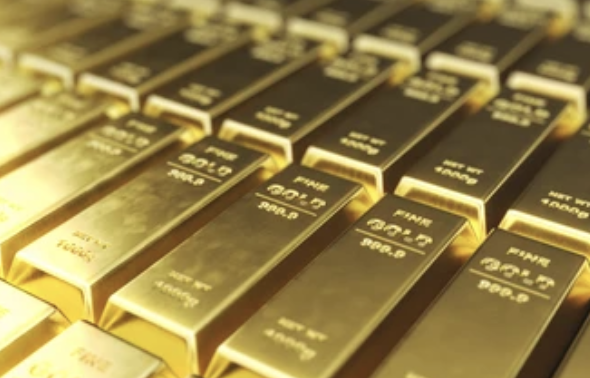
Forecast for the price of gold: XAU/USD bears looking for a crucial increase in US rates around CPI

Daniel Rogers

Aug 10, 2022 11:25

 截屏2022-06-07 下午5.14.47.png


As markets wait for the US inflation statistics for July, which will be released during the opening of New York, the price of gold is unchanged in Tokyo. Lower yields have helped to support the price, which helps because gold doesn't offer any interest. On Tuesday, the US 10-year note hit a new corrective low of 2.746%. Since then, they have recovered to a high of 2.816%, but this is still much below their 52-week range high of 3.497%, which was recorded in mid-June 2022.


The US inflation figures due out on Wednesday will likely show a level of price growth that will lead the Federal Reserve to raise interest rates further, and this is the main focus of the markets.


Although there will be another report before the following Federal Reserve meeting, the Fed is anticipated to increase interest rates by another 75 basis points when combined with last week's NFP report. However, officials should this time pay particular attention to core inflation. According to experts at ANZ Bank, "a continuation of recent trends would be undesirable and likely lean the Fed toward another significant rate increase at the 20–21 September FOMC meeting."


The market must determine whether the sticky and robust core is more significant than the slowing headline, according to TD Securities analysts. We will be short-term focused on whether this statistic disturbs resilient risk sentiment because that will also assist influence near-term USD price action. "The USD remains sensitive to US data surprises."


In terms of Fed forecasts, WIRP is now showing over 75% odds of a 75 bp raise at the FOMC meeting on September 20-21, which would be expected to keep the dollar in the hands of bulls. According to analysts at Brown Brothers Harriman, markets are still factoring in a swift Fed flip into an easing cycle in the first quarter of 2023. The numbers support the Fed's position that things are not as bad as they appear, at least for the time being.


In addition to the inflation figures, the August 25–27 Jackson Hole Economic Symposium will be closely watched before the FOMC meeting on September 20–21. The analysts at BBH explained that "by late August, we will have seen all the major July data and some of the early August surveys, such as the preliminary S&P Global PMI readings and regional Fed surveys." Fed Chairs frequently use this symposium in August to announce or hint at policy shifts ahead of the September FOMC meetings. In Q3, the Fed will also be well-aware of the state of the economy. Despite this, we do not believe the Fed will announce any significant policy changes or put itself in a precarious position before the FOMC meeting next month.


As a result, Jackson Hole and the CPI statistics will be crucial for gold. A higher-than-expected reading for today's inflation data could be the trigger for a final shake-out of obstinate and stale shorts inside the volatility before the next substantial move to the south. On the other side, a deeper positive correcting in gold prices would be anticipated if the US dollar were to decline on a lower reading.