• English
  • 简体中文
  • 繁體中文
  • Tiếng Việt
  • ไทย
  • Indonesia
Subscribe
Real-time News
South Korean stocks rose on Wednesday, marking their third consecutive day of gains, primarily driven by optimism surrounding AI, with chip stocks surging. The KOSPI index jumped over 4% to 6635 points, its highest level since August 5th. Kiwoom Securities analyst Han Ji-young stated, "With the strong demand for AI infrastructure demonstrated by CoreWeave and Supermicro being validated, capital inflows into the semiconductor sector and domestic AI-related stocks in South Korea are expected to improve." Among heavyweight stocks, Samsung Electronics and SK Hynix rose over 7%, while LG Energy Solution gained approximately 3%. Hyundai Motor and Kia Motors rose approximately 2% and 1.5%, respectively.Hong Kong-listed tech stocks weakened amid volatility, with Tencent Holdings (00700.HK) falling more than 3%, Kuaishou (01024.HK) and Baidu (09888.HK) falling more than 2%, and Alibaba (09988.HK) and JD.com (09618.HK) following suit.On August 12th, Fan Gang, Vice President of the China Society for Economic System Reform and Director of the National Economic Research Institute, delivered an economic speech at the 2026 Boao Real Estate Forum. Fan Gang stated that the Chinese economy is undergoing a structural adjustment more in line with market economy principles, and the real estate market has seen relatively rapid price clearing, with the bottoming process potentially faster than Japans in the past. From the demand side, Chinas long-standing structural problem of "emphasizing supply over demand" is being addressed. Fan Gang pointed out that the current "15th Five-Year Plan" has regarded market demand as the scarcest resource, and macroeconomics is essentially demand-driven. Consumption concepts are also undergoing positive changes, with the younger generation of tech elites beginning to focus on housing quality, and luxury homes in major cities becoming the main sales driver, marking the beginning of a new economic growth logic. "The Chinese economy is in a new stage of development that is more market-oriented and more in line with market principles," Fan Gang noted.August 12 - According to the website of the China Maritime Safety Administration, the Shanwei Maritime Safety Administration issued a navigation warning that live-fire exercises will be conducted in parts of the South China Sea from 5:00 to 18:00 on August 12, and entry is prohibited.Futures Commentary by Everbright Futures: 1. Overnight gold market: London spot gold -0.50%, SHFE gold -0.28%. Gold prices declined slightly as the market focused on tonights US CPI data. Combined with the decline in gasoline prices in July and cooling housing inflation, July inflation data is likely to show a month-on-month decrease. The current market expectation is a 3.5% year-on-year increase in July CPI and a 2.5% year-on-year increase in core CPI. If the inflation data is lower than expected, concerns about interest rate hikes may cool again, potentially increasing gold price volatility. The data itself is full of uncertainty and speculative trading, and gold prices are treated cautiously before the data release. Investors are paying attention to the performance of gold prices in the upper range. 2. Geopolitical news: According to Wall Street News, an advisor to Irans Supreme Leader stated that the Strait of Hormuz will not be opened until Irans conditions are met; US officials stated that the US military fired on a ship attempting to break through the US blockade of Iranian ports; although Pakistan released optimistic signals on Tuesday that the US and Iran were close to reaching some kind of agreement, the actual reopening of the Strait of Hormuz still faces significant obstacles.

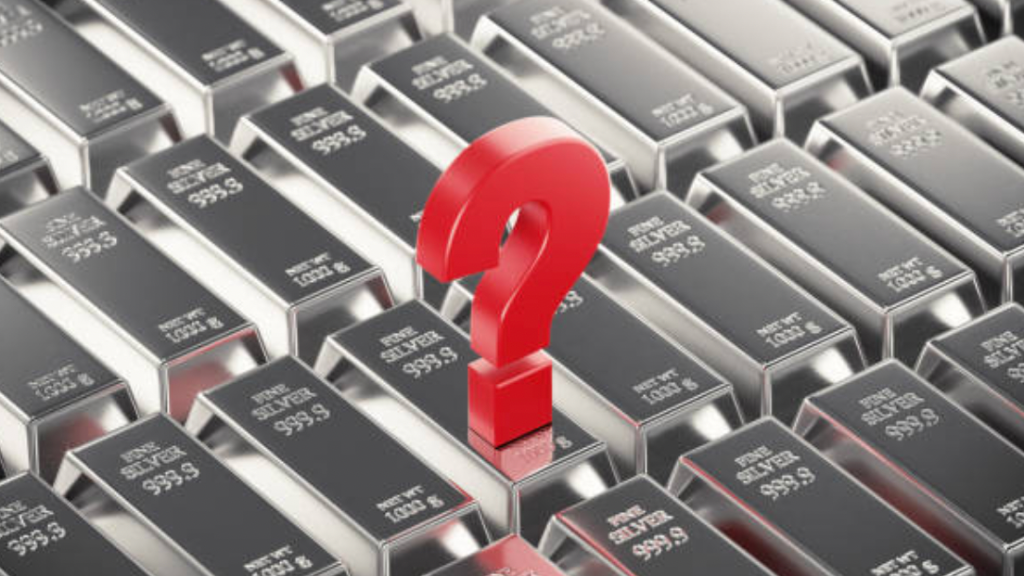
XAU/USD declines under $1,800 ahead of Fed Minutes as DXY rises, according to the gold price prediction

Alina Haynes

Aug 15, 2022 15:01

 截屏2022-08-12 下午3.26.08_1024x576.png


The price of gold (XAU/USD) retreated to an intraday low near $1,795 on Monday's Asian trading session due to a stronger US dollar. To counter this, the market's recent caution in anticipation of this week's Federal Open Market Committee (FOMC) meeting minutes has been bolstered by negative sentiment and catalysts from China.


As a wave of risk aversion supports demand for the dollar as a shelter, the US Dollar Index (DXY) licks its wounds at 105.75. The Fed officials' reluctance to applaud the recent decline in inflation as well as concerns about the economy in China and Europe are other factors that keep the dollar solid.


Recently, China's retail sales decreased to 2.7% YoY in July from 5.0% predicted and 3.1% from the previous month, while industrial production (IP) decreased slightly to 3.8% from 3.9% from the previous month and 4.6% from market expectations. China's July inflation data also decreased over the previous week, which led the People's Bank of China (PBOC) to lower the interest rates on its one-year medium-term lending facility (MLF) by 10 basis points (bps). Because China is the world's largest consumer of commodities, news about the country is likely to have an impact on XAU/USD values.


Amidst a sharp fall in Russia's energy exports to the old continent as a result of the bloc's sanctions against Moscow for its invasion of Ukraine, economic worries are also apparent in Europe.


The news that numerous US congressmen are visiting Taiwan following House Speaker Nancy Pelosi's visit appeared to have increased tension concerns over the weekend, which in turn affected gold prices.


The Wall Street Journal (WSJ) has hinted that US President Joe Biden and his Chinese counterpart Xi Jinping will likely meet, which might encourage a risk-taking attitude. News reports claiming improved coronavirus conditions in Shanghai, China's financial center, also helped lift the atmosphere.


In other places, weaker US Consumer Price Index (CPI) and Producers Price Index (PPI) readings were able to allay market concerns about inflation. Thomas Barkin, president of the Richmond Federal Reserve (Fed) Bank, stated on Friday that he still wants to hike interest rates further in order to contain inflation. According to Reuters, Barkin said on CNBC, "I'd like to see a period of sustained inflation under control, and until we get that I think we really are going to have to raise rates into restrictive zone."


The US 10-year Treasury rates, which reflect the sentiment, are still under pressure at approximately 2.83 after registering weekly losses on Friday night. Further, S&P 500 Futures show intraday losses of 0.25 percent, whilst Japan's Nikkei 225 is up 2.65 percent as of the time of publication. It's important to remember that Wall Street rose on Friday.


Gold traders may wait for Wednesday's Fed Minutes for more clarity after tracking the risk catalysts earlier. However, the August NY Empire State Manufacturing Index, which is predicted to be 8.5 vs 1.1 previously, could provide quick guidance.

Technical Assessment

Gold price reverses from the 61.8% Fibonacci retracement of the June-July fall to post its largest daily loss in over a week. However, the RSI (14) decline also supports the most recent XAU/USD weakening.


The 50-SMA level near $1,784 must first confirm the pullback swings before they can point gold sellers in the direction of the prior resistance line from June 16, which is now near $1,760 as of the time of the press.


The 200-SMA and 38.2% Fibonacci retracement level converging near $1,754 appears to be a tough nut for the metal sellers to break, it should be observed.


Alternately, a fortnight-old resistance line at $1,811 functions as an additional filter to the north, so an upward clearance of the 61.8% golden ratio, close to $1,805, could not be above to boost the XAU/USD values.