• English
  • 简体中文
  • 繁體中文
  • Tiếng Việt
  • ไทย
  • Indonesia
Subscribe
Real-time News
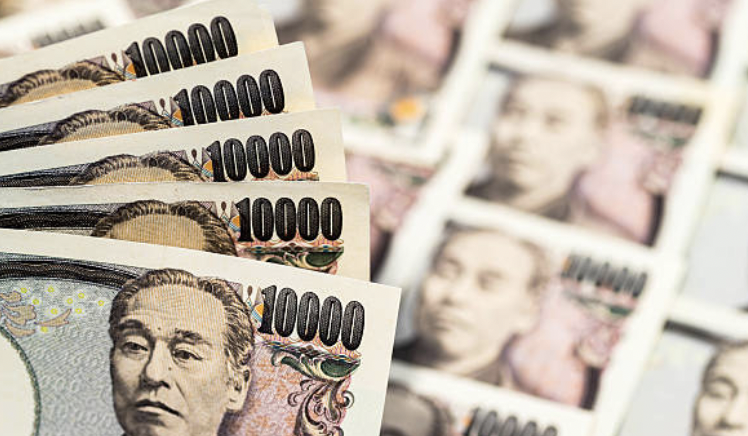
On September 2nd, Bank of Japan Governor Kazuo Ueda stated that he would consider the risks of rising prices when deciding on monetary policy, a statement that could further fuel market speculation about a rate hike at the BOJs policy meeting later this month. Speaking after the G20 finance ministers and central bank governors meeting, Ueda said the BOJ would, as always, have a thorough discussion on monetary policy at its next meeting. Ueda declined to comment on the markets strong expectations for a September rate hike. However, he stated that recent economic data was consistent with the BOJs previous outlook. This key statement suggests that the BOJ is proceeding with its planned further rate hike. The BOJ has previously indicated that future policy discussions will focus on the risks of rising prices. Uedas remarks come as US Treasury Secretary Scott Bessant further called for appropriate policy action from the BOJ this week, further reinforcing market expectations of an imminent rate hike. Overnight index swaps indicate that the market believes there is approximately a 99% probability of a BOJ rate hike in September.U.S. Energy Secretary Wright: 17 million barrels of oil passed through the Strait of Hormuz on Monday.Bank of Japan Governor Kazuo Ueda: We are closely monitoring foreign exchange fluctuations, which are one of the risk factors for price prospects.Bank of Japan Governor Kazuo Ueda: From a risk management perspective, we are paying more attention than ever to upside and downside risks, especially upside price risks.Bank of Japan Governor Kazuo Ueda: We will not focus solely on foreign exchange, and we will not react more strongly to foreign exchange fluctuations when formulating policies than before.

The USD/CAD Exchange Rate Retreats from the 50-Day Simple Moving Average Ahead of the Bank of Canada's Rate Hike

Drake Hampton

Apr 13, 2022 09:49

Discussion Points Regarding the Canadian Dollar 

USD/CAD is struggling to maintain its early week gains as the US Consumer Price Index (CPI) update triggered a bearish reaction in the US Dollar, and the Bank of Canada's (BoC) interest rate decision may weigh on the exchange rate as the central bank is expected to deliver its third rate hike in 2022.

USD/CAD Rate Reaches 50-Day Simple Moving Average Ahead Of Boc Rate Hike

USD/CAD eases off a new weekly high (1.2662) as a smaller-than-expected increase in the core measure of US consumer prices reinforces the Federal Reserve's expectation that "firming monetary policy, combined with a gradual fading of supply–demand imbalances, would help to anchor longer-term inflation expectations and eventually bring inflation down."


As a result, the Federal Open Market Committee (FOMC) may seek to unload its holdings of Treasury securities, agency debt, and agency mortgage-backed securities later this year, and the BoC meeting may bring an end to the recent series of higher highs and lows in USD/CAD, as the central bank is expected to deliver another 50 basis point rate hike.


Simultaneously, the Bank of Canada may announce plans to wind down its balance sheet when Governor Tiff Macklem and Co. release their quarterly Monetary Policy Report (MPR), and any change in the central bank's exit strategy could trigger a larger pullback in USD/CAD as the exchange rate struggles to break above the 50-Day SMA (1.2660).


Nonetheless, expectations for a further shift in Fed policy may keep USD/CAD afloat ahead of the central bank's next interest rate decision on May 4, as Governor Lael Brainard has stated that the central bank could "reduce the balance sheet at a rapid pace as soon as our May meeting," and a further advance in the exchange rate may continue to alleviate the downward trend in retail sentiment seen last year.


The number of traders who are net-long has decreased by 5.59 percent from yesterday and 17.80 percent from last week, while the number of traders who are net-short has increased by 2.35 percent from yesterday and 14.47 percent from last week. The fall in net-long interest has controlled crowding behavior, as 73.79 percent of traders were net-long USD/CAD last week, while the increase in net-short interest coincides with the exchange rate's effort to reclaim the 50-Day SMA (1.2660).


With that said, the Bank of Canada's rate decision may jeopardize the advance from the yearly low (1.2403) if the central bank implements a 50bp rate hike and begins quantitative tightening (QT), but USD/CAD may continue to retrace the decline from the March high (1.2901) if Governor Macklem and Co. adopt a predetermined course for monetary policy.

Daily Chart of the USD/CAD Exchange Rate

Keep in mind that USD/CAD appeared to be on pace to test the November low (1.2352) in March, but a lack of impetus to close below the Fibonacci overlap between 1.2410 (23.6 percent expansion) and 1.2440 (23.6 percent expansion) has brought the exchange rate back towards the 50-Day SMA (1.2660).


A closing above the 1.2620 (50 percent retracement) to 1.2650 (78.6 percent expansion) region would be required to bring the 1.2770 (38.2 percent expansion) level to the forefront, with the next zone of interest coming in around 1.2830 (38.2 percent retracement) to 1.2880. (61.8 percent expansion).


However, a failure to trade above the 50-Day SMA (1.2660) might send USD/CAD down towards the 1.2510 (78.6 percent retracement) region, with the next area of interest located between 1.2410 (23.6 percent expansion) and 1.2440. (23.6 percent expansion).


image.png