• English
  • 简体中文
  • 繁體中文
  • Tiếng Việt
  • ไทย
  • Indonesia
Subscribe
Real-time News
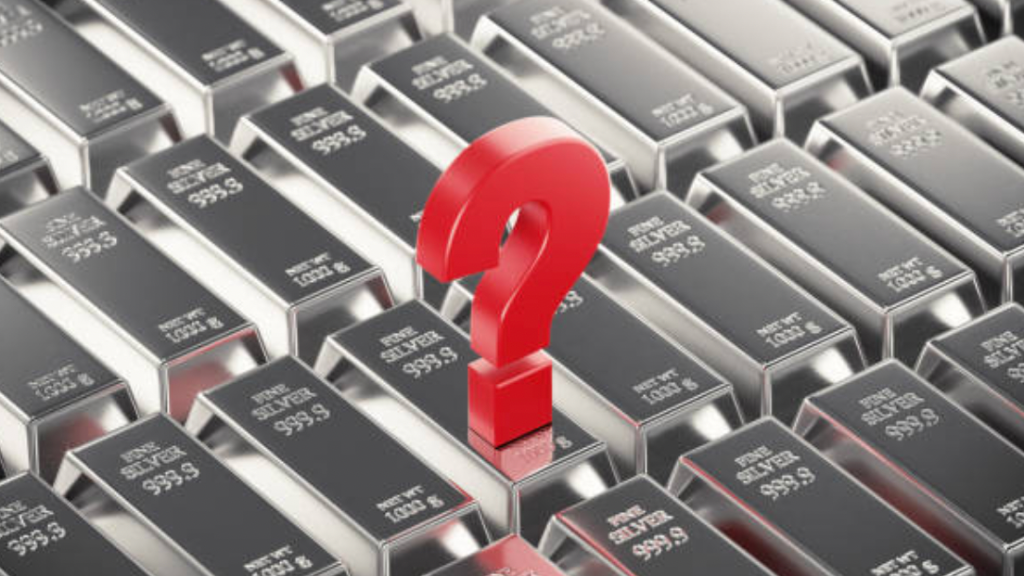
1. All three major U.S. stock indexes closed lower. The Dow Jones Industrial Average fell 0.34% to 49,240.99 points, the S&P 500 fell 0.84% to 6,917.81 points, and the Nasdaq Composite fell 1.43% to 23,255.19 points. Salesforce fell nearly 7%, and IBM fell more than 6%, leading the Dows decline. Walmart rose nearly 3%, pushing its market capitalization above $1 trillion. The Wind U.S. Tech Big Seven Index fell 1.62%, with Microsoft and Nvidia both falling nearly 3%. The Nasdaq China Golden Dragon Index fell 0.94%, with Daqo New Energy and Bilibili both falling more than 4%. Investors sold off tech stocks, and the Nasdaq almost completely wiped out its year-to-date gains. The partial U.S. government shutdown will prevent the January jobs report from being released this Friday as scheduled. 2. European stock markets closed slightly lower. The German DAX index fell 0.07% to 24,781.38 points, the French CAC40 index fell 0.02% to 8,179.5 points, and the UK FTSE 100 index fell 0.26% to 10,314.59 points. A market correction was triggered by a sharp decline in global AI stocks, uncertainty surrounding the pace of the Federal Reserves interest rate cuts, fundamental problems in the European economy, high market valuations, and profit-taking pressure. 3. US Treasury yields were mixed. The 2-year Treasury yield rose 0.01 basis points to 3.570%, the 3-year Treasury yield rose 0.01 basis points to 3.643%, the 5-year Treasury yield fell 0.34 basis points to 3.832%, the 10-year Treasury yield fell 0.59 basis points to 4.266%, and the 30-year Treasury yield fell 1.76 basis points to 4.895%. 4. International precious metals futures generally closed higher. COMEX gold futures rose 6.83% to $4,970.50 per ounce, and COMEX silver futures rose 10.27% to $84.92 per ounce. Signals of interest rate cuts from the Federal Reserve, the end of the US government shutdown, and progress on the US-India trade agreement, coupled with adjustments to risk control measures by exchanges, all boosted market sentiment and drove prices higher. 5. The main WTI crude oil contract closed up 2.83% at $63.9 per barrel; the main Brent crude oil contract rose 2.55% to $67.99 per barrel. Data from the American Petroleum Institute (API) showed that US crude oil inventories fell by 11.079 million barrels last week, far exceeding expectations, indicating a contraction in market supply and pushing up oil prices. 6. Most London base metals rose, with LME tin up 7.95% to $50,295.0/ton, LME copper up 4.02% to $13,410.0/ton, LME nickel up 3.38% to $17,395.0/ton, LME aluminum up 1.41% to $3,099.0/ton, LME zinc down 0.02% to $3,323.0/ton, and LME lead down 0.08% to $1,961.5/ton.Pony.ai-W (02026.HK) announced on the Hong Kong Stock Exchange that, based on a preliminary assessment of the Groups unaudited consolidated management accounts for the year ended December 31, 2025 and currently available information, the Group expects to record a net loss of approximately US$69 million to US$86 million for the reporting period.AMD (AMD.O) CEO Lisa Su: I do not believe the company will face supply constraints when it expands its AI chip production capacity in the second half of the year.Conflict Situation: 1. Kharkiv, Ukraine, has activated its emergency response mechanism. 2. Ukraines power company, DTEK, stated that last nights Russian airstrikes were the largest attack on the energy system since early 2026. 3. The mayor of Kharkiv stated that nearly 270,000 Kharkiv residents are still without heating after the Russian attacks. Peace Negotiations: 1. Ukraine agreed to a multi-tiered plan to implement a potential ceasefire agreement with Russia. 2. Zelensky: The UAE talks aimed to assess Russias willingness to compromise. Ukraine will remain open to similar proposals from the United States, such as a cessation of attacks. Other Developments: 1. Zelensky approved Ukraines new defense plan framework. 2. Zelensky: Ukraine is negotiating with the United States for more Patriot missiles. 3. NATO Secretary General: NATO military support will arrive in Ukraine immediately after a peace agreement is reached. 4. European Commission spokesperson: Ursula von der Leyen will visit Ukraine on the fourth anniversary of the Russia-Ukraine conflict. 5. Russian Deputy Foreign Minister Ryabkov stated that Russias nuclear triad modernization has reached a very advanced stage. February 4th - Barbara Hampton, CEO of U.S. Rare Earth Corporation, stated that the company has over $3 billion in potential funding to build a domestic rare earth and critical mineral supply chain. Hampton anticipates that the funding includes up to $1.6 billion in grants from the U.S. Department of Commerce, with the remainder coming from the private sector. She stated that this would enable the Round Top deposit to begin production by 2028. She said, "Our current communications indicate that the U.S. government is willing to make procurement commitments several years earlier to ensure supply stability." Following the governments announcement of a $12 billion critical mineral reserve plan, the companys stock price rose over 17% on Tuesday. It should be noted that federal funding is contingent on achieving phased goals, and private sector investments have not yet been finalized. However, Hampton emphasized that this funding will allow the company to accelerate its plans.

XAU/USD declines under $1,800 ahead of Fed Minutes as DXY rises, according to the gold price prediction

Alina Haynes

Aug 15, 2022 15:01

 截屏2022-08-12 下午3.26.08_1024x576.png


The price of gold (XAU/USD) retreated to an intraday low near $1,795 on Monday's Asian trading session due to a stronger US dollar. To counter this, the market's recent caution in anticipation of this week's Federal Open Market Committee (FOMC) meeting minutes has been bolstered by negative sentiment and catalysts from China.


As a wave of risk aversion supports demand for the dollar as a shelter, the US Dollar Index (DXY) licks its wounds at 105.75. The Fed officials' reluctance to applaud the recent decline in inflation as well as concerns about the economy in China and Europe are other factors that keep the dollar solid.


Recently, China's retail sales decreased to 2.7% YoY in July from 5.0% predicted and 3.1% from the previous month, while industrial production (IP) decreased slightly to 3.8% from 3.9% from the previous month and 4.6% from market expectations. China's July inflation data also decreased over the previous week, which led the People's Bank of China (PBOC) to lower the interest rates on its one-year medium-term lending facility (MLF) by 10 basis points (bps). Because China is the world's largest consumer of commodities, news about the country is likely to have an impact on XAU/USD values.


Amidst a sharp fall in Russia's energy exports to the old continent as a result of the bloc's sanctions against Moscow for its invasion of Ukraine, economic worries are also apparent in Europe.


The news that numerous US congressmen are visiting Taiwan following House Speaker Nancy Pelosi's visit appeared to have increased tension concerns over the weekend, which in turn affected gold prices.


The Wall Street Journal (WSJ) has hinted that US President Joe Biden and his Chinese counterpart Xi Jinping will likely meet, which might encourage a risk-taking attitude. News reports claiming improved coronavirus conditions in Shanghai, China's financial center, also helped lift the atmosphere.


In other places, weaker US Consumer Price Index (CPI) and Producers Price Index (PPI) readings were able to allay market concerns about inflation. Thomas Barkin, president of the Richmond Federal Reserve (Fed) Bank, stated on Friday that he still wants to hike interest rates further in order to contain inflation. According to Reuters, Barkin said on CNBC, "I'd like to see a period of sustained inflation under control, and until we get that I think we really are going to have to raise rates into restrictive zone."


The US 10-year Treasury rates, which reflect the sentiment, are still under pressure at approximately 2.83 after registering weekly losses on Friday night. Further, S&P 500 Futures show intraday losses of 0.25 percent, whilst Japan's Nikkei 225 is up 2.65 percent as of the time of publication. It's important to remember that Wall Street rose on Friday.


Gold traders may wait for Wednesday's Fed Minutes for more clarity after tracking the risk catalysts earlier. However, the August NY Empire State Manufacturing Index, which is predicted to be 8.5 vs 1.1 previously, could provide quick guidance.

Technical Assessment

Gold price reverses from the 61.8% Fibonacci retracement of the June-July fall to post its largest daily loss in over a week. However, the RSI (14) decline also supports the most recent XAU/USD weakening.


The 50-SMA level near $1,784 must first confirm the pullback swings before they can point gold sellers in the direction of the prior resistance line from June 16, which is now near $1,760 as of the time of the press.


The 200-SMA and 38.2% Fibonacci retracement level converging near $1,754 appears to be a tough nut for the metal sellers to break, it should be observed.


Alternately, a fortnight-old resistance line at $1,811 functions as an additional filter to the north, so an upward clearance of the 61.8% golden ratio, close to $1,805, could not be above to boost the XAU/USD values.