• English
  • 简体中文
  • 繁體中文
  • Tiếng Việt
  • ไทย
  • Indonesia
Subscribe
Real-time News
On June 6th, Wu Qing, Chairman of the China Securities Regulatory Commission (CSRC), delivered a speech at the Fourth Member Representative Conference of the Asset Management Association of China. Wu Qing stated that in recent years, algorithmic trading has become an important trading method in major capital markets worldwide, including my country. Besides well-known quantitative private equity funds, foreign investors, public funds, other professional institutional investors, and even some individual investors have all adopted algorithmic trading to varying degrees. Taking into full account the national and market conditions where individual investors constitute the majority, a series of regulatory rules and regulations for algorithmic trading have been introduced, a trading reporting mechanism has been established, targeted monitoring and control have been strengthened, abnormal trading behavior has been strictly regulated, and efforts have been made to guide a reduction in trading frequency and speed, and strengthen the management of trading business units. Based on this, we will conduct in-depth research and continuously improve the regulatory mechanism for algorithmic trading, further emphasizing fairness and standardization, strengthening targeted supervision, effectively preventing the abuse of technological advantages, and resolutely cracking down on illegal and irregular activities such as market manipulation and disruption of market order.On June 6, Russian President Vladimir Putin stated at the plenary session of the 29th St. Petersburg International Economic Forum on June 5 that the Russian governments task is to strive for a return to steady economic growth starting next year, and one of the conditions for achieving this is to increase investment and launch a new investment cycle. Putin said that from 2021 to 2024, Russias actual investment increased by nearly 38%, but this figure declined last year. Launching a new investment cycle is a key task for the governments economic departments, and investment growth is an important indicator of their effectiveness. He also said that to achieve balanced economic growth, it is necessary to rely on domestic demand and maintain a continued decline in the inflation rate. Currently, Russian inflation has slowed significantly, and the inflation rate is expected to be close to 5.2% this year. Putin emphasized that a strong sovereign state cannot be isolated. Russia must both independently produce essential products and strengthen infrastructure construction, while also strengthening exchanges, cooperation, and promoting cross-border cooperation projects with foreign partners.On June 6, the Argentine Ministry of Health announced on June 5 that it would expand its investigation into the Hantavirus by sending an expert team to Mendoza Province in western Argentina. In a statement, the Ministry said that based on rodent behavior and epidemiological criteria, the expert team decided to expand the investigation to Mendoza Province. A team comprised of experts from the Carlos Malván Institute of the National Institute of Laboratories and Health of Argentina and the U.S. Centers for Disease Control and Prevention will conduct the investigation in Mendoza Province from June 8 to 12. The team will set traps to capture rodents such as the long-tailed dwarf rice rat, which are linked to the spread of Hantavirus. All samples will undergo preliminary processing in the on-site laboratory and then be temporarily stored at a local facility before being transported to the Malván Institute.June 6th - Stronger-than-expected US non-farm payroll data for May ignited market concerns about a Federal Reserve rate hike this year. On Friday, previously crowded and highly valued AI and technology stocks suffered a sharp decline, while gold and silver prices also plummeted. Ryan Detrick, chief market strategist at Carson Group, noted, "The technology and semiconductor sectors have experienced a record rally over the past nine weeks, and today the market dam finally broke. The stronger-than-expected jobs report has put the Fed in a dilemma regarding whether to cut rates for the remainder of the year, and the market is expressing its dissatisfaction by selling off its best-performing stocks this year." Phil Streible, chief market strategist at Blue Line Futures, pointed out that some investors reduced their gold holdings to offset losses in other assets, exacerbating the selling pressure on precious metals. Bart Melek, global head of commodities strategy at TD Securities, stated, "The non-farm payroll data significantly exceeded market expectations. Given the ongoing Middle East wars, high energy prices, and significant inflationary pressures, the Fed has virtually no intention of cutting rates. In this context, the cost of holding gold is becoming increasingly high."June 6th - In Jinan, AI models are now being mass-produced on assembly lines, much like automobiles. The first step in producing AI models begins in the data workshop, essentially the raw material warehouse for the entire large model factory. Massive amounts of raw data are cleaned, filtered, and labeled here, transforming them into qualified raw materials for model production. The second step is model forging. In the model workshop, the employees on the production line are the "large models" themselves, and various large models become "digital craftsmen," training the models according to order requirements. The trained AI models then enter the third step: rigorous final testing. What leaves the model workshop is only a semi-finished product. In the factorys evaluation center, new models are constantly given "tests." If they fail the test, they are sent back for rework. Only by passing the rigorous "final test" can the model enter the market. Passing the test leads to the fourth step—integration training. In the integration workshop, the models are "integrated" into robotic arms and robots. Through repeated motion collection and training, the AI or intelligent agent can master physical skills before it can empower various industries. The seemingly simple four-step process actually includes 75 meticulous procedures, reducing the AI model development cycle from 90 person-days to 20 person-days.

USD/CAD Extends Gains Following Fed Remarks on Aggressive Policy Tightening

Larissa Barlow

Apr 08, 2022 10:31

Tips 

  • The dollar gained strength versus a basket of major currencies.

  • Benchmark yields have retreated following a recent surge.

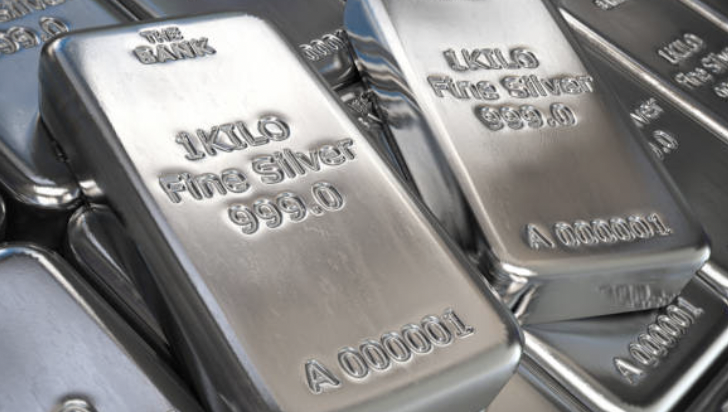
  • Gold and silver prices increased in response to inflation fears and the imposition of fresh sanctions on Russia.

  • Oil prices continue to decline as more reserves are released.


The dollar nearly reached a two-year high against a basket of currencies as the Federal Reserve made it clear that it intends to battle inflation forcefully through rate hikes. Benchmark yields decreased a few basis points today after the Federal Reserve announced its intention to continue tightening rates. The 10-year yield reaches its highest level since March 2019 of 2.67 percent as investors digest news of the Fed's policy tightening. Gold and silver prices increased as rising inflation fears fueled a surge in demand for safe-haven assets. This circumstance contradicts the Federal Reserve's recommendations on interest rate hikes. Oil prices fell as EIA member states announced plans to release additional strategic reserves. This is the largest release since the stockpile was established in 1980. Analysts disagree on the extent to which the release of supply will affect market tightness.


For the latest week, jobless claims decreased by 5,000 to 166,000. This figure, which is the lowest since 1968, indicates the extent to which the job market tightened last week. Dow Jones estimated the figure at 200,000. The figures indicate that the labor market has been experiencing a significant labor shortage. Increased demand for labor has resulted in rising wages and soaring inflation.

Technical Evaluation

The USD/CAD exchange rate continues to increase, staying near a two-week high of 1.258. The substantial increases come in the context of the Federal Reserve's aggressive policy stance and declining oil prices. New penalties against Russia, on the other hand, will bolster the Loonie and may limit gains. Reduced yields may act as a brake on the dollar's strength. In general, the Fed's tightening policy benefits USD bulls. Resistance is located near the 10-day moving average, which is now at 1.265. Near yesterday's lows near 1.243, support is seen. The short-term momentum shifted to the upside when the fast stochastic crossed above the buy signal.


Although the MACD line generated a crossover sell signal, the medium-term momentum is negative but favorable. When the MACD line (the 12-day moving average minus the 26-day moving average) passes the MACD signal line, this scenario occurs (the 9-day moving average of the MACD line).


image.png