• English
  • 简体中文
  • 繁體中文
  • Tiếng Việt
  • ไทย
  • Indonesia
Subscribe
Real-time News
June 23 - Starting from midnight on July 1st, the national railway will implement a new train schedule. Guangzhou North Station will launch its first direct train service to West Kowloon. It is understood that the Guangzhou-Shenzhen-Hong Kong Express Rail Link will add three stations—Guangzhou North, Yiwu, and Fuqing West—from July 1st, bringing the total number of direct stations to 113. The G6080/G6079 trains between Hong Kong West Kowloon and Zhangjiajie West, and the G903 train from Tianjin West to Hong Kong West Kowloon, will both stop at Guangzhou North Station. The newly built Foshan Station is nearing completion and will soon be operational, adding two new high-speed trains between Foshan and Changsha, filling the gap in Foshans direct connections to cities along the Beijing-Guangzhou High-Speed Railway. Foshan residents will no longer need to detour through the Guangzhou hub to directly reach core cities along the Beijing-Guangzhou line, such as Changsha and Wuhan.On June 23, Kuaishou (01024.HK) launched its "Express Delivery" fast-delivery service within the Kuaishou Apps mall, with a separate entry point. Unlike mainstream instant retail in the industry, Kuaishous Express Delivery only offers two types of cross-regional express delivery products: tomorrow delivery and the day after tomorrow delivery. It does not offer hourly delivery or same-day delivery within the same city.The U.S. ADP employment change for the week ending June 6 was 30,750, compared to 25,500 in the previous week.The weekly change in U.S. ADP employment figures for the week ending June 6 will be released in ten minutes.The China Earthquake Networks Center officially measured a 3.1-magnitude earthquake at 19:57 on June 23 in Haixi Prefecture, Qinghai Province (37.83 degrees north latitude, 95.33 degrees east longitude), with a focal depth of 10 kilometers.

The yen bullish trend may be gone, the dollar against the yen is expected to hit a nearly one-year high

Eden

Oct 26, 2021 10:52

On Friday (October 8), the U.S. Senate approved a temporary increase in the U.S. debt ceiling. The market’s improved risk sentiment pushed up U.S. Treasury yields and the U.S. stock market. The benchmark 10-year Treasury yield hit a four-month high. The yen was sold off for the second consecutive trading day, suggesting that the trend of USD/JPY retreat from the 19-month high set in September has ended. If the non-agricultural data performs well in the day, the currency pair is expected to hit the high point since 2020 in the market outlook.


Yen’s short-term correction may be over, non-agricultural data is expected to perform well


Undermining the attractiveness of the yen as a safe haven is the recent agreement between the Democrats and Republicans to raise the US debt ceiling. Before reaching an agreement, the market is worried that the US government may default on its current debt, which may cause a major chain reaction in the global market. Nevertheless, the yen bulls seized this opportunity to regain some of their losses. As global markets become more risk-seeking, the short-term correction of the USD/JPY price rally may be coming to an end.

At present, the market is eagerly awaiting the release of the key US employment report in September. Last month’s data was unexpectedly weak. This time the market predicts that the number of non-agricultural employment will increase by 500,000 from the previous value. If the actual situation is in line with market expectations or a slight upward movement, the dollar will rise sharply, and if the non-agricultural employment data is worse than expected, the dollar will fall sharply.

Both the US ADP’s employment data yesterday and today’s initial jobless claims data were better than expected, which increased the dollar’s upward mobility. However, this has not been fully reflected on the daily chart of USD/JPY, as the market is waiting for the key non-agricultural employment data to be released in the evening. In any case, the Fed may have no choice but to reduce asset purchases (shrink the scale of bond purchases), because the current inflation environment is not as "transient" as initially thought.

Japan's official news and the US-Japan interest rate gap still need attention


Shunichi Suzuki, the Japanese Finance Minister, also issued a noteworthy statement, stating that he will pay close attention to the exchange rate of the yen in case of subsequent sharp fluctuations. He hinted that the level of 112.40 is a concern

The interest rate differential between the United States and Japan will continue to drive this market, so pay close attention to the 10-year yield in the United States and, of course, the 10-year yield in the Japanese government bond market. With the convergence of key data and risk events, the market will face volatility in the next few days, and the Fed will not make any new decisions in the short term. Investors need to be cautious and can use the currency pair as an indicator of the relative strength of the yen itself.

USD/JPY technical analysis


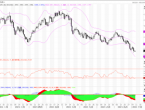
At present, the relative strength index (RSI) of USD/JPY has fallen from the overbought level and is expected to rise further to the highest price of 112.23 in November 2020, and then approach 112.66 next week.

On the downside, the 111.00 support level is still strong. If the fundamentals are stable as expected, the support level is unlikely to be broken. If the price does fall back to 111.00, the bulls may see this as an attractive long entry zone. It seems that it is only a matter of time before the resistance level is broken.


(Daily chart of USD/JPY)

GMT+8 At 15:18 on October 8, the USD/JPY traded at 111.97/99.