• English
  • 简体中文
  • 繁體中文
  • Tiếng Việt
  • ไทย
  • Indonesia
Subscribe
Real-time News
On June 25th, Westpac stated that it expects the Reserve Bank of New Zealand (RBNZ) to be less likely to raise interest rates as sharply as initially anticipated. This is because an early resolution to the Iranian conflict implies a weaker inflation outlook and an earlier economic recovery. Westpac anticipates the RBNZ will begin raising rates in September, but will only raise them once more for the remainder of the year. This means the official cash rate will peak at 4.0% by the end of 2027, before falling back to a neutral level of 3.75% by the end of 2028. Previously, Westpac had predicted the rate could reach as high as 4.25%. Westpac wrote, "Our core view suggests that the RBNZ will raise rates one less time this year than our most recent forecast, but one more time than pre-conflict projections."The yield on Japans 20-year government bonds fell 1.5 basis points to 3.55%.The bid-to-cover ratio for Japans 20-year government bond auction was 2.97, the lowest level since May 2025, compared to 4.01 in May.June 25th - The 4th China International Blockchain Expo (CIE) was held in Beijing from June 22nd to 26th. It is reported that Japan had the largest number of delegations from Asian countries at this years CIE. Ten Japanese economic delegations visited China, including representatives from the Japan Business Federation (Keidanren) and the Japan Chamber of Commerce and Industry. Keidanren is Japans largest and most authoritative comprehensive economic organization, with core members encompassing leading companies across almost all sectors. The Japan Chamber of Commerce and Industry is one of Japans largest national business organizations. The Kansai Economic Federation represents the Kansai region, Japans second-largest economic zone. These ten organizations broadly cover all aspects of Japans social enterprise network.June 25 – The Ministry of Ecology and Environment held its regular June press conference today (June 25). Officials stated that my country has entered its main flood season, and in response to the severe situation of potentially large fluctuations in water quality during this period, the Ministry has acted swiftly and made arrangements. Regarding abnormal water quality fluctuations during the flood season, the Ministry will promptly conduct analysis and consultations, providing point-to-point guidance to local authorities to identify the causes and accelerate rectification. Simultaneously, it will promote joint risk assessment and collaborative countermeasures between upstream and downstream areas, as well as between left and right banks of river basins, to avoid situations where "upstream pollution leads to downstream liability" or "left-bank remediation leads to right-bank relapse," thus forming a closed-loop management system for problem assignment, rectification implementation, and follow-up evaluation.

Gold And Copper Plummet to 10-day Lows As The Dollar Recovers

Haiden Holmes

Nov 01, 2022 15:04

19.png


On Tuesday, gold prices reached a 10-day low, and broader commodities markets also lost ground as the dollar climbed in anticipation of a widely anticipated Federal Reserve interest rate hike.


Spot gold fell 0.1% to $1,631.70 per ounce around 20:05 ET, while gold futures fell 0.4% to $1,637.75 per ounce (00:05 GMT). After a seventh straight month of decline in October, both assets were trading at 10-day lows.


In anticipation of a Federal Reserve meeting that will conclude on Wednesday, the price of bullion is anticipated to decline further. In all likelihood, the central bank will raise interest rates by 75 basis points (bps).


Nonetheless, the Federal Reserve's stance on monetary policy will be closely observed, as some predict the central bank may temper its aggressive stance. The markets are divided over the likelihood of a 50 basis point (bps) rate hike by the Federal Reserve in December, especially in light of the belief that high interest rates may inhibit economic growth.


In spite of this, interest rates in the United States are at their highest level since the 2008 financial crisis, which is expected to keep the dollar strong and gold weak in the coming months. Rising Treasury yields this year boosted the opportunity cost of holding gold, prompting investors to shun the yellow metal.


It is projected that if interest rates rise, the bulk of other precious metals would also lose value.


As investors waited for a rate hike, the dollar index climbed 0.8% on Monday, extending its return to a fourth consecutive day. The rise of the dollar has also imposed considerable pressure on the metal markets.


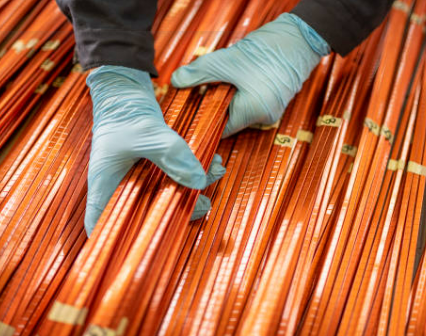
On Tuesday, copper prices remained constant at $3.3812 per pound after losing 1.5% in the prior session.


China, the world's largest copper importer, revealed weaker-than-anticipated manufacturing data, raising fears of a decline in domestic demand.


In addition, it is projected that additional COVID outbreaks in the country may hinder economic activity, which may further diminish commodity demand.


Copper prices have just reached their lowest level in two years as China-related concerns, rising inflation, and rising interest rates hampered demand forecasts.


In the next months, however, the red metal's price is predicted to increase as a result of a decline in Chilean production and U.S. sanctions against Russian miners.