• English
  • 简体中文
  • 繁體中文
  • Tiếng Việt
  • ไทย
  • Indonesia
Subscribe
Real-time News
Fitch affirmed Frances rating at A+; outlook is stable.On August 29th, local time, the Iranian Islamic Revolutionary Guard Corps Navy issued a statement on August 28th, claiming that the statements by US officials regarding the opening of the Strait of Hormuz were lies, intended only to control oil prices and cover up their failures. The statement emphasized that the Revolutionary Guards control over this strategic waterway is absolutely secure. Iran has ordered that all vessels attempting to pass through the Strait of Hormuz without Iranian coordination are prohibited from passage. The Revolutionary Guard Navy stated that this operation will continue until the US military action against Iran is completely terminated and its obligations are fulfilled.On August 29, Hezbollah leader Naeem Qassem called on the Lebanese government on August 28 to cancel the trilateral framework agreement between Lebanon, Israel, and the United States, saying the agreement undermines Lebanese sovereignty and fails to protect Lebanese rights. According to Hezbollahs Al-Ahram TV, Qassem made the remarks at an event in the southern suburbs of Beirut, calling the agreement "illegal, unjust, and humiliating." He said, "We oppose and call for the cancellation of this framework agreement." Qassem accused the United States and Israel of attempting to control and divide the Middle East. He said the Palestinian, Lebanese, Iranian, Yemeni, and Iraqi people have made sacrifices to prevent this plan from being realized.According to filings with the U.S. Securities and Exchange Commission, Boeings (BA.N) new 364-day revolving credit agreement will expire on August 23, 2027, and can convert the borrowings into term loans; the agreement requires the company to maintain at least $5 billion in liquidity.According to filings with the U.S. Securities and Exchange Commission, Boeing (BA.N) signed a new $3 billion, 364-day revolving credit agreement on August 24 to replace the original $3 billion, 364-day revolving credit agreement that expired that day.

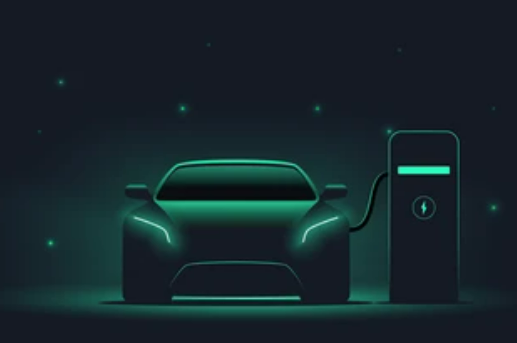
EU Bans New Cars Powered by Fossil Fuels by 2035

Charlie Brooks

Oct 28, 2022 15:02

8.png


Thursday, the European Union struck an agreement on a policy that will effectively restrict the sale of new gasoline and diesel vehicles by 2035. The purpose is to accelerate the transition to electric vehicles and tackle climate change.


EU negotiators, the European Parliament, which must approve new EU legislation, and the European Commission, which crafts new laws, agreed that carmakers must achieve a 100% reduction in CO2 emissions by 2035, making it illegal to sell new vehicles fueled by fossil fuels in the 27-nation bloc.


"This deal is fantastic news for motorists... new zero-emission vehicles will become more affordable and accessible to all," said Jan Huitema, the European Parliament's chief negotiator.


According to EU climate policy chief Frans Timmermans, the agreement sends a strong signal to industry and consumers. "Europe is embracing the shift to zero-emission mobility," he remarked.


The agreement also stipulated a 55% reduction in CO2 emissions for new cars sold after 2030, relative to 2021 levels, which is much higher than the current objective of a 37.5% reduction by that year.


New vans must reduce their CO2 emissions by 100 percent by 2035 and by 50 percent by 2030, comparable to 2021 levels.


In response to rising governmental pressure to decrease their carbon footprints, many manufacturers have announced investments in electrification. Volkswagen (ETR:VOWG p) CEO Thomas Schaefer said this week that, beginning in 2033, the company will produce entirely electric vehicles in Europe.


The European automobile industry organization ACEA cautioned against barring a single technology and urged internal combustion engines and hydrogen vehicles to have a role in the low-carbon transition when the EU rule was proposed in July 2021.


Thursday, negotiators reached an agreement that the EU will draft a proposal on the sale of automobiles powered by "CO2-neutral fuels" after 2035.


Prior to 2036, when they will be subject to the zero-emission obligation, small automakers producing fewer than 10,000 vehicles annually can negotiate more forgiving standards.


The rule is the first to be finalized within a bigger package of new EU regulations designed to satisfy the bloc's greenhouse gas emission reduction objectives.


Brussels needs agreements on two additional pieces of legislation from the package prior to November's United Nations climate negotiations in order to demonstrate that the union is advancing its climate objectives despite an oncoming recession and soaring energy prices.