• English
  • 简体中文
  • 繁體中文
  • Tiếng Việt
  • ไทย
  • Indonesia
Subscribe
Real-time News
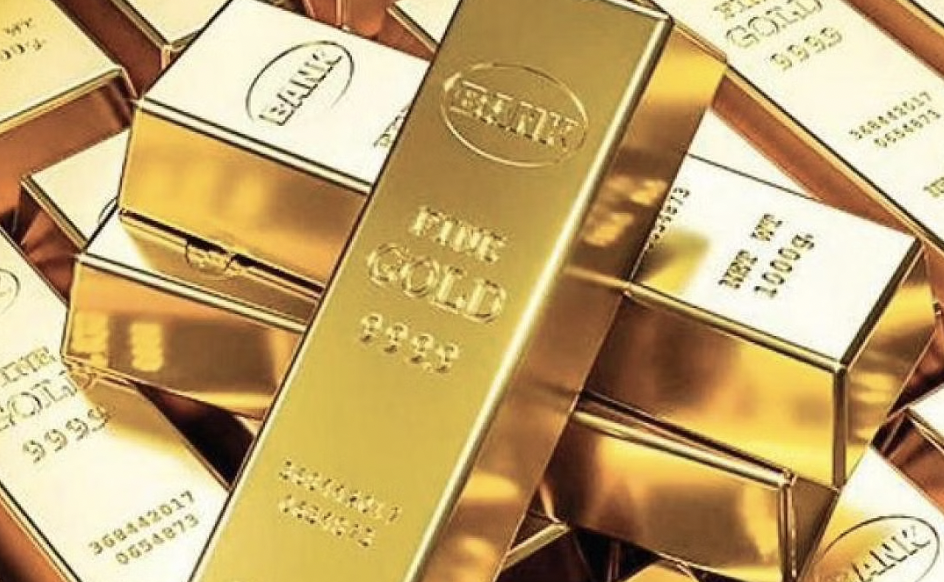
On December 3rd, William Blair analyst Alexandra Symeonidi stated that golds upward momentum may face challenges as asset allocation shifts back to risk assets if market sentiment improves next year. She noted that while gold futures open interest is above the long-term average, it is well below this years peak, potentially indicating a weakening of optimism in the gold market after the strong start to the year. In a report, the analyst pointed out that investors may increase their gold allocations given sticky inflation during a rate-cutting cycle. Symeonidi also believes that "central bank demand for gold is more structural, given the increasing US fiscal deficit and the low proportion of gold held in foreign exchange reserves by emerging market central banks."The yield on Japans 40-year government bond rose 3.0 basis points to 3.715%.Fitch: The surge in AI spending will support the prospects of South Korean memory chip manufacturers.Philippine central bank governor: Economic growth prospects are slowing, and the probability of an interest rate cut in December has increased further.On December 3, Iranian Parliament Speaker Mohammad Ghalibaf stated at a press conference in Tehran on December 2 that Iran supports diplomatic contact and negotiations on an equal footing. However, in previous negotiations, the United States did not address the issues but instead imposed its own demands on Iran, forcing it to surrender. Ghalibaf pointed out that the United States demanded that Iran reduce its missile range, but Irans self-defense was "non-negotiable" and it was impossible for Iran to accept this demand. He said that Europe, under direct orders from the United States, activated the "snapback" sanctions mechanism, failing to demonstrate its independent will. Due to its obedience to the United States, Europe no longer plays any role in the Iranian nuclear issue. Irans suspension of cooperation with the International Atomic Energy Agency was the "most important and accurate" decision.

Copper price snaps four-day rally despite China's increased metal imports in August

Alina Haynes

Sep 07, 2022 16:38

 截屏2022-09-07 下午4.18.40.png


Intraday, the price of copper falls almost 1.5%, representing the greatest day decline of the week as of early Wednesday morning in Europe. In doing so, the red metal breaks the previous three-day recovery from the six-week low.


Reuters reported that three-month copper prices on the London Metal Exchange (LME) completed the month of August at $7,801.50 per tonne, up 8.5% from a 20-month low reached on July 15 but still down 19.7% from the beginning of the year.


Fears of economic slowdown in the world's largest client, China, as well as the rest of the world, receive considerable attention as the causes are investigated. Increasing market wagers over the Fed's assertiveness are also placing a downward impact on metal prices. In contrast, an increase in China's copper imports should have supported metal prices, but it did not.


"According to customs statistics released on Wednesday, China imported 26% more copper in August than a year earlier, as lower prices and stockpiles prompted by power rationing increased demand for foreign supply," said Reuters. In August, China imported a total of 498,188.60 tonnes of unwrought copper and copper products, which included anode, refined, alloy, and semi-finished copper products. Compared to the previous year's amount of 394,017.10 tonnes, this is a two-year low.


It should be emphasized that copper buyers are not pleased with the drop in warehouse supplies. Reuters reported that Shanghai Futures Exchange copper warehouse stocks fell to a seven-month low of 31,205 tonnes on August 19.


On a separate page, US Treasury rates surge to a new multi-day high, propelling the US Dollar Index (DXY) closer reclaiming the two-decade high. This combines with hawkish Fed forecasts to impact on market sentiment and push the USD/JPY to its highest level in 24 years and the USD/CNH near the critical 7,000 milestone.


The US ISM Services PMI increased to 56.9, compared to the market's forecast of 55.1 and the prior reading of 56.7. However, the S&P Global Composite PMI and Services PMI decreased to 44.6 and 43.7, respectively, from early projections of 45.0 and 44.1, respectively. Despite this, the US Dollar Index (DXY) increased upon the announcement and reestablished a 20-year high. The CME's FedWatch Tool indicates a 72.0% chance of a 50 basis point (bps) Fed rate hike in September, up from 57.0% one day ago.


Consequently, commodities continue to decline, while US stock futures and Asia-Pacific stocks report losses at the latest.


The monthly releases of the US trade balance and Fed Beige Book reports could provide commodity traders with entertainment. However, the next two days will be dominated by the numerous Fed speakers, including Fed Chairman Jerome Powell, who are slated to make public appearances.