• English
  • 简体中文
  • 繁體中文
  • Tiếng Việt
  • ไทย
  • Indonesia
Subscribe
Real-time News
February 25th - Iraqi Oil Minister Hayyan Abdul Ghani announced on Tuesday that oil exports from the Kurdistan region are between 200,000 and 210,000 barrels per day, and Iraq is gradually approaching its export target. He added that Iraqi oil exports have reached "more than 3.4 million barrels per day," and efforts are currently underway to increase exports to "more than 3.45 million barrels per day." Iraqi law stipulates that approximately 3.5 million barrels of oil must be exported daily to meet government revenue targets.February 25th - A senior finance official in Zambia, Africas second-largest copper producer, stated that the country will utilize higher-than-expected mining revenues to launch a stabilization fund this year to ensure the government has a buffer in case the copper price surge subsides. Zambian Finance Minister Felix Nkulukusa called this mechanism an "emergency fund," and the government will complete the framework for the fund this year, after which surplus funds can be deposited. He stated that this will allow Zambia to smoothly complete its budget preparation when facing challenges in pricing and budgets. Previously, with soaring global copper demand and increased domestic copper production, Zambias economy experienced a strong recovery, its currency performed best against the US dollar globally, foreign investors flocked to its government bond market, and its stock market index ranked among the top four globally in terms of gains over the past 12 months.Iraqi Oil Minister: The West Qurna 2 oil field in Iraq currently produces 450,000 barrels per day. After Chevron takes over the oil field, the daily production is expected to reach 750,000 to 800,000 barrels.February 25th Futures News: 1. WTI crude oil futures trading volume was 816,375 lots, an increase of 139,515 lots from the previous trading day. Open interest was 2,104,501 lots, an increase of 34,417 lots from the previous trading day. 2. Brent crude oil futures trading volume was 175,108 lots, an increase of 42,587 lots from the previous trading day. Open interest was 267,320 lots, a decrease of 2,583 lots from the previous trading day. 3. Natural gas futures trading volume was 492,310 lots, an increase of 94,425 lots from the previous trading day. Open interest was 1,625,540 lots, an increase of 26,493 lots from the previous trading day.On February 25th, former Bank of Japan Governor Haruhiko Kuroda stated that given the already strong economic situation, it is necessary to continue raising interest rates and tightening fiscal policy. He warned that Prime Minister Sanae Takaichis massive spending plan could trigger overheated inflation. Kuroda is known for his aggressive monetary stimulus policy launched in 2013, a key component of former Prime Minister Shinzo Abes "Abenomics" reflation strategy. He stated that with robust economic growth and steady wage increases, the Bank of Japan may raise interest rates approximately twice a year in 2026 and 2027. "Today, Japan faces inflation and a depreciating yen. Japan needs to shift to tighter fiscal and monetary policies. The Bank of Japan must gradually raise interest rates to a neutral level. Fiscal policy must also be tightened. I have doubts about whether increasing spending and tax cuts are appropriate." Kuroda warned that expansionary fiscal policy could backfire, exacerbating inflationary pressures and pushing up bond yields.

XAU/USD remains below $2,000 as the market awaits the Federal Reserve's policy decision

Alina Haynes

Mar 21, 2023 14:02

 259.png


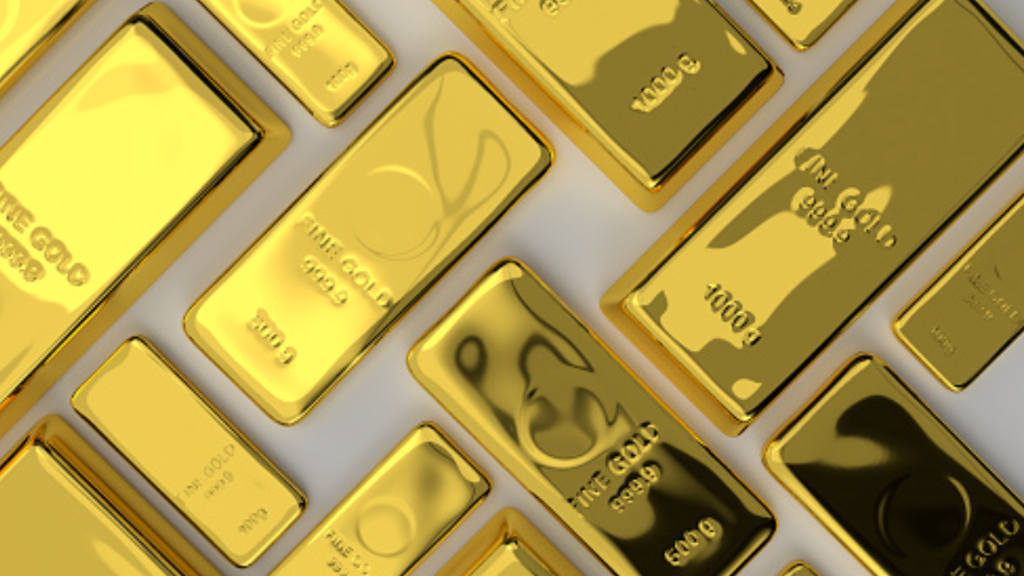
On Monday of this week, gold prices reached a new yearly high, with XAU/USD surpassing $2,000 for only the third time in recorded history; the last time was during the COVID era.


Gold prices have not retreated since the March low of around $1,800, when a strong bull run began. Gold prices have a strong inverse correlation with yields on US Treasury (UST) bonds, which declined significantly in March.


The global banking turmoil has compelled investors to reevaluate their outlook on the rising cost of financing. As a result of this uncertainty, investors sought refuge in US Treasury bonds, causing yields to decline.


Some speculations imply that the pinnacle in US Treasury yields may have been reached. Gold's function as a safe sanctuary in times of adversity and the decline in U.S. Treasury yields could be behind this exponential price increase.


Despite gold prices lingering around $2,000, it is premature to declare a peak. According to the CME FedWatch tool, the markets are pricing in a 26.2% chance that the Fed will leave interest rates unchanged at the conclusion of its March 21-22 meeting, and a 75% chance of a 25 basis point (bps) increase.


It is extremely unlikely that the Fed will abruptly end the present rate-hiking cycle. However, it should not be forgotten that the Fed has previously made mid-cycle adjustments. Given that most central banks are nearing the zenith of their rate hike cycles, it is not inconceivable that the Federal Reserve could signal the end of the cycle.


Inflation, however, remains above the Fed's objective of 2%, so it would be imprudent for the Fed to halt or end the raising cycle.