• English
  • 简体中文
  • 繁體中文
  • Tiếng Việt
  • ไทย
  • Indonesia
Subscribe
Real-time News
March 14 - According to US media reports citing US officials, five US Air Force refueling tankers were damaged in Irans missile attack on the Prince Sultan airbase in Saudi Arabia. The report stated that the tankers were damaged in a recent Iranian missile attack. A source said the aircraft were damaged but not completely destroyed and are currently undergoing repairs. No casualties were reported. The report did not specify the exact model of the tankers.Saudi Ministry of Defense: A drone was intercepted and destroyed in the eastern region.Market news: Smoke rose over the area of the U.S. Embassy in Iraq, suspected to be a direct hit by an Iranian unidirectional attack drone.On March 14, according to Iranian media Fars News, more than 15 explosions were heard across Hargh Island during the US attack on Irans main oil export hub. The US attack appeared to target multiple locations, including an army air defense system, a naval base, an airport control tower, and a helicopter hangar operated by Irans offshore oil company. The media outlet cited witnesses who reported seeing smoke rising from parts of the island. The report stated that the islands oil infrastructure was undamaged, confirming President Trumps description of the attack. Iran had previously warned that any attack on its energy facilities could trigger retaliation against oil and gas infrastructure in the region linked to the US and its allies.March 14 – The Trump administration has initiated a process to massively utilize the U.S. emergency petroleum reserves, issuing a request to exchange 86 million barrels of crude oil. The Department of Energy stated in a statement Friday that oil drawn from the Strategic Petroleum Reserve, as part of the 172 million barrel release plan announced Wednesday, is expected to begin flowing into the market by the end of next week. This release of oil reserves is expected to take four months to complete and is part of a coordinated 400 million barrel action plan with other countries. Under the exchange terms, companies will return the loaned oil to the Department of Energy in the future, paying an additional amount as a premium. The Department of Energy stated earlier this week that the Trump administration has planned to replenish the Strategic Petroleum Reserve with approximately 200 million barrels of oil over the next year, 20% more than the reserves being used this time.

U.S. CPI highlights inflationary pressures, pound-dollar bulls suffer a heavy blow

Eden

Oct 26, 2021 11:03

On Wednesday (October 13), the pound rose against the dollar and fell. The newly released US September CPI performed better than expected, which dealt a heavy blow to the pound bulls.


The US Bureau of Labor Statistics announced on Wednesday that the US consumer price index (CPI) in September rose to 5.4% year-on-year from 5.3% in August. Analysts expect it to remain at 5.3%. On a monthly basis, the CPI rose slightly from 0.3% to 0.4%.

Further details of the data show that the core CPI (excluding volatile food and energy prices) remains unchanged at 4% as expected.

The financial website Forexlive commented on the US September CPI data, saying that the US dollar surged higher after the CPI data was released, most likely because the strong wage data received a response. Wage growth is the real crux of inflation, which is also evident in the non-agricultural employment report. It should be noted that the weakening of the food service industry caused by the delta strain and the decline in workers' wages may distort this situation. It is expected that this problem will be resolved soon with the sharp decline in new cases of new coronary pneumonia in the United States.

Another agency commented that the US September CPI rose more than expected, highlighting the continued existence of inflationary pressures in the economy. Unprecedented shipping challenges, material shortages, high commodity prices, and rising wages are all driving up the costs for manufacturers.

One stone stirred up waves, and the data quickly boosted the strength of the dollar and greatly dragged down the pound.

Earlier, the August GDP data released by the United Kingdom once pushed the pound to 0.4%.

After the British economy contracted for the first time in six months in July, it resumed growth in August. As a result, financial markets continued to bet that the Bank of England would start raising interest rates before the end of the year.

Britain’s August gross domestic product (GDP) grew by 0.4%, slightly lower than analysts’ market expectations of 0.5%. The July data was revised down to a decrease of 0.1%, when employee absenteeism caused by the Delta variant of the new crown virus reached a high point.

The Bank of England looks set to be the first major central bank to raise interest rates since the outbreak. Financial markets are betting that the benchmark interest rate will rise to 0.25% by December, which is currently at the lowest level in history of 0.1%.

From a fundamental point of view, the downward pressure on the pound will continue to exist before the Federal Reserve officially announced the reduction of debt purchases in early November.

Technically, the pound has been trading sideways recently, and the rebound since the end of September has been clearly lacking in momentum, and it is still below the 50% retracement level of the 1.3913-1.3412 range, which is also quite detrimental to the bulls.

ABN AMRO predicts that if the Bank of England rejects the call for early tightening of monetary policy, the pound may briefly fall to 1.32 against the dollar in the next two months.

At present, the long and short sides are still in the game, and the minutes of the Fed meeting later will provide new guidance, but it is expected to be negative for the pound.

Below the pound, what needs attention is yesterday's low of 1.3569. If you break this support, look at 1.3531, which is a 23.6% retracement level. A break below this level may open the door to the September 29 low of 1.3412.

Above, pay attention to the daily high of 1.3644, and further pay attention to the October 11 high of 1.3674 and the 50-day moving average at 1.3725.

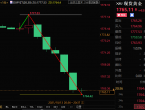
(The British pound against the U.S. dollar daily chart)

At GMT+8 21:09, the British pound was quoted at 1.3604 against the U.S. dollar.