• English
  • 简体中文
  • 繁體中文
  • Tiếng Việt
  • ไทย
  • Indonesia
Subscribe
Real-time News
On June 16th, Tohru Sasaki, chief strategist at Fukuoka Financial Group and a former Bank of Japan official, stated that a minor surprise was the scale of Japanese government bond purchases. The market had expected the purchase scale to remain largely unchanged after April next year, but it was actually slightly reduced and will remain unchanged thereafter. Therefore, this differs slightly from market consensus. However, the focus is on how Bank of Japan Deputy Governor Shinichi Uchida will articulate future monetary policy. Uchida needs to proceed cautiously at this press conference. It will be very difficult for him to express any major shifts in future policy. Therefore, I believe the market may interpret Uchidas press conference as a dovish signal. The Ministry of Finance may intervene on the day of the Bank of Japans interest rate hike due to the continued weakness of the yen. Looking ahead, I believe the health of Bank of Japan Governor Kazuo Ueda is crucial. If he needs to be replaced for health reasons, his successor will likely be a dovish governor.June 16 – The Reserve Bank of Australia (RBA) kept its key interest rate unchanged for the first time this year, given that the previous three rate hikes had begun to put pressure on the Australian economy. On Tuesday, all nine members of the committee unanimously voted to keep the cash rate at 4.35%, in line with expectations. RBA Governor Bullock will hold a press conference later, and investors will be watching to see if policymakers will enter a prolonged pause or continue their tightening stance. In its statement, the RBA said, “The cash rate target has been raised three times since the beginning of the year, and current financial conditions are tighter than before, with signs of an economic slowdown emerging as expected.” This pause in rate hikes marks a softening of the RBA’s aggressive tightening policy, which had previously made it stand out among major central banks. While policymakers continue to warn that inflation remains too high and that high energy costs related to the war with Iran pose upside risks, recent weaker data has provided the central bank with room to hold its position and assess the situation.June 16 – On the morning of June 16, President Xi Jinping held talks with Myanmar President Min Aung Hlaing, who was on a state visit to China, at the Great Hall of the People in Beijing. Xi Jinping pointed out that President Min Aung Hlaing has long been a friend of China. Last year, we met twice and exchanged in-depth views on strategic and directional issues concerning China-Myanmar relations. I am willing to continue to strengthen guidance with you, carry forward the fraternal friendship, deepen comprehensive strategic cooperation, promote the building of a China-Myanmar community with a shared future to achieve more results, bring more benefits to the people of both countries, and make greater contributions to regional peace and development.Reserve Bank of Australia: Signs of economic slowdown are emerging as expected after the 2026 rate hike.Reserve Bank of Australia: The impact of high oil prices on goods and services is becoming apparent.

The pound against the dollar gave up its gains since the non-agricultural upset! Reduction expectations have not yet cooled down

Oct 26, 2021 11:04

On Friday (October 8), affected by the mixed employment data in the United States, the pound against the dollar gained some positive traction in the past hour and hit a more than one-week high near 1.3655, but then almost gave up all the gains. .


On the last day of the week, GBP/USD attracted some low-point buying near the 1.3580-85 area and turned positive for the second day in a row. This is also the sixth trading day of the previous seven trading days, and it has gained additional boost from the mild weakness of the US dollar in the early trading in the North American market.

After the non-agricultural employment data was significantly lower than expected and showed that the United States only created 194,000 jobs in September, there was some sell-off in the US dollar. This number was far below the expected 500,000, but was partially offset by the upward revision of last month's data. More details show that the unemployment rate fell below 5.0% for the first time since the pandemic began in March 2020.

Institutional comments on US non-agricultural employment data: The number of new jobs in the United States in September has been lower than expected for the second consecutive month, indicating a weak recovery in the labor market, complicating the Fed’s decision to reduce monetary support before the end of the year. The sluggish employment growth for several months shows that there is a tug-of-war between employers and job-seekers-employers desperately need employees, and job-seekers are slow to return to the workplace. Nevertheless, as companies raise wages, the reopening of schools and the end of federal unemployment benefits should lead to an increase in hiring in the coming months.

However, these data have hardly weakened expectations that the Fed will soon begin to reduce bond purchases and may raise interest rates in 2022.

The exchange rate bears subsequently counterattacked, further strengthening this. In fact, the benchmark 10-year U.S. Treasury bond yield continues to stabilize at around 1.59%, which is close to a 4-month high. This, in turn, continued to boost the U.S. dollar and restrained any surge in the pound against the U.S. dollar.

On the upside, the resistance levels focus on 1.3655, 1.3717, and 1.3743, and on the downside, the support levels focus on 1.3574, 1.3544, and 1.3500.

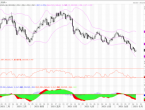
(The British pound against the U.S. dollar daily chart)

At 21:42 GMT+8, the pound was quoted at 1.3629 against the US dollar.