• English
  • 简体中文
  • 繁體中文
  • Tiếng Việt
  • ไทย
  • Indonesia
Subscribe
Real-time News
February 15th - Nick Timiraos, a vocal advocate for the Federal Reserve, wrote that key indicators of the U.S. economy are pointing in the same positive direction: inflation is declining, the labor market remains strong, and economic growth is solid. This is not a definitive conclusion, but it represents the closest the U.S. economy has ever come to a soft landing (i.e., curbing inflation while avoiding a recession). Just four years ago, many economists thought this was impossible. Now, the scenario of the U.S. economy bringing inflation back to the Feds 2% target without falling into recession is once again credible. However, even without oxygen masks, its too early to unfasten the seatbelts. The Feds preferred inflation gauge, the core PCE annual rate, is currently close to 3%, and many forecasters expect little progress in inflation this year as tariff-related price increases spread further. Meanwhile, the labor market may not be as robust as last weeks report suggested. Payden & Rygels chief economist, Jeffrey Cleveland, stated that objectively speaking, the labor market has been weak, and the unemployment rate is more likely to rise than fall this year.February 15th - European Central Bank President Christine Lagarde stated during a panel discussion at the Munich Security Conference on Sunday that current market developments indicate investors are interested in allocating more capital to Europe. Creating incentives for European investment is a better approach than using taxes to prevent capital outflows. Lagarde believes that US President Trumps disruptive trade policies serve as a "spur" for Europe to accelerate economic reforms. Beyond economic challenges, this has also brought European leaders closer together. She stated that the EUs €90 billion ($107 billion) support package for Ukraine demonstrates that the union can drive meaningful decision-making even if not all member states support an agreement.U.S. Secretary of State Marco Rubio: The United States has taken note of reports from various countries assessing the poisoning of prominent Russian opposition politician Alexei Navalny. The United States does not question this assessment, nor is there any reason to question it.US Secretary of State Marco Rubio believes that President Trumps aide Witkov and Trumps son-in-law Kushner are "at this moment" traveling to Iran for an important meeting on Iran.Slovak Prime Minister: Hopes to sign an agreement with Westinghouse Electric Company next year to lead the construction of a new nuclear power plant.

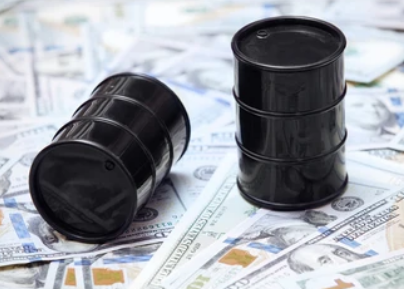
The Release of U.S. Petroleum Reserves Decreases Oil Prices

Aria Thomas

Feb 14, 2023 16:50

77.png


Oil prices dipped on Tuesday as the U.S. government announced it will release extra petroleum from its Strategic Petroleum Reserve (SPR) in accordance with a congressional mandate, contrary to some traders' predictions that the delivery would be canceled or postponed.


By 07:30 GMT, Brent crude futures had dropped by 43 cents, or 0.5%, to $86.18 per barrel, while U.S. crude futures had decreased by 71 cents, or 0.85%, to $74.33 per barrel.


After the conclusion of the previous session, the U.S. Department of Energy (DOE) announced that it will sell 26 million barrels of oil from the Strategic Petroleum Reserve, a move that would likely reduce the reserve to its lowest level since 1983.


Edward Moya, an analyst at OANDA, stated, "Energy markets expected to hear news about restocking the SPR and not tapping them for fresh supplies."


The DOE contemplated canceling the fiscal year 2023 sale after the government of former U.S. President Joe Biden sold a record 180 million barrels from the reserve in fiscal year 2018. However, this would have necessitated congressional action to alter the mandate.


January's critical consumer price index (CPI) statistics for the United States will be released on Tuesday. In the previous two months, monthly consumer prices in the United States grew instead of declining, increasing the likelihood of greater inflation readings in the coming months.


Tina Teng, an analyst at CMC Markets, stated, "Any data that exceeds expectations may prompt a fresh sell-off in risk assets, particularly oil."


After the Energy Information Administration projected record March production from the seven largest U.S. shale basins, supply fears also diminished. A significant Turkish port restarted crude shipments after a severe earthquake shook the area.


"Oil is on the defensive, and things might get worse if inflation proves more difficult to control," said Moya of OANDA.