• English
  • 简体中文
  • 繁體中文
  • Tiếng Việt
  • ไทย
  • Indonesia
Subscribe
Real-time News
Ukrainian President Zelenskyy has ordered the import of electricity and additional power equipment to be expedited as much as possible.On January 17, the worlds first legally binding international convention on the protection of biodiversity in the high seas—the Agreement on Marine Biodiversity—officially entered into force, marking a historic moment for global ocean conservation after nearly 20 years of negotiations. According to the Agreement, signatory states must strengthen cooperation in marine science and technology and support developing countries in improving their ocean governance capabilities. Companies planning activities that may harm marine ecosystems must conduct environmental impact assessments according to the Agreements standards. Marine biological research involving commercial development must be reported to the international community and its findings shared. As of the day before the agreements entry into force, 83 countries had completed the ratification process, including major maritime powers such as China. The United States, while having signed the agreement, has not yet ratified it and therefore can only participate in subsequent meetings as an observer, without voting rights.Irans Supreme Leader Ayatollah Khamenei: Those with ties to Israel and the United States caused massive destruction and resulted in the deaths of thousands during the protests.On January 17, Iranian Supreme Leader Ayatollah Khamenei met with thousands of people from various sectors of society in Tehran and addressed the nation on the recent situation. Khamenei stated that because US President Trump has caused casualties and losses in Iran and slandered the Iranian people, "we consider him a criminal." Khamenei elaborated on the nature of the recent unrest and Irans responsibility in dealing with the situation, emphasizing the need to clearly understand the true intentions of hostile forces and to adopt the correct stance in response.January 17th - On January 17th, Carrot Express and UAE-based autonomous mobility company AutoGo announced the official launch of fully driverless commercial operations for the public in Abu Dhabi. Starting immediately, local residents and tourists can hail Carrot Expresss fully driverless vehicles through the AutoGo App. This marks Carrot Expresss first overseas launch of a fully driverless mobility service for the public, signifying a crucial step forward in the commercialization and internationalization of Chinese autonomous driving technology.

Qatar claims that it is unable to cool energy prices, and oil prices may reach 90!

Oct 26, 2021 11:02

U.S. crude oil rushed to the 82 mark on Monday (October 11), hitting a seven-year high, and oil distribution hit a three-year high, showing that the contradiction between the rebound in global energy demand and the shortage of supply has become more prominent. At the same time, natural gas prices remain at historic highs, prompting power plants to continue to switch fuels from natural gas to oil. But Qatar said it could not help lower energy prices and supply more fuel to the market.

Analysts still generally expect oil prices to continue to rise, and Citigroup’s latest forecast says that oil prices may climb to $90 per barrel.


Qatar's inability to alleviate the global energy crisis


Qatar, the world’s largest seller of liquefied natural gas (LNG), told consumers that it was unable to cool energy prices because British steelmakers said they might be forced to suspend production due to soaring costs.

The rebound in economic activity following the relaxation of the coronavirus lockdown has exposed shortages of natural gas stocks and other fuel supplies, leading to power outages in some countries.

In order to keep factories open and home heating, industry executives and governments have to pay more for energy and re-use the most polluting fossil fuels, coal and oil.

As some generators switched to burning oil and crude oil futures jumped to a seven-year high on Monday, analysts predict that prices will remain strong.

Liquefied natural gas prices fell to historical lows during the peak of the pandemic lockdown, and have soared to record highs this year, but Qatar said it has no available supply to quell market concerns.

Saad al-Kaabi, Qatar’s energy minister, said: “As far as we have provided all our customers with the due quantity, we have run out. I am unhappy with the high gasoline prices.”

Globally, high prices are putting pressure on governments and industries, which have warned that unemployment and costs may be passed on to customers and consumers.

The White House calls on OPEC+ to take more action


A US official said on Monday that the White House insisted on calling on oil-producing countries to "take more action" to support the global economic recovery.

The official stated that the government is closely monitoring the cost of oil and gasoline and "using all the tools we can use to address anti-competitive practices in the U.S. and global energy markets to ensure that the energy market is reliable and stable."

According to the official, he has raised concerns with OPEC+ at the top.

Since the beginning of the pandemic, OPEC+ has maintained supply restrictions. At some point, due to weak demand, it reduced the daily supply of more than 10 million barrels from the market. As of July, it agreed to increase production by 400,000 barrels per day to phase out the ongoing reduction of 5.8 million barrels per day.

Production groups headed by Saudi Arabia have been worried that the subsequent outbreak of the coronavirus will disrupt demand, and are concerned about the financial status of their members, which benefited from price increases.

U.S. oil production reached a peak of nearly 13 million barrels per day at the end of 2019, but it is still well below that level, although daily fuel demand has rebounded to pre-pandemic levels.

Citi: With the reduction of oil inventories this winter, oil prices may climb to US$90/barrel


Citigroup said that due to the shift in natural gas demand to oil, oil consumption has increased by as much as 1 million barrels per day. Oil prices are expected to reach $90 per barrel this winter, and inventories may fall to record lows by the end of the year.

Brent crude oil is already close to US$85/barrel, while WTI crude oil hit a new high since 2014, as traders are preparing for increased oil consumption during the global energy crisis. At the same time, OPEC+ only resumed supply to the market by a small margin. Although the group currently insists on its plan to increase production by 400,000 barrels per day, Citi expects that under pressure from major oil-consuming countries such as the United States and India, OPEC+ may choose to increase production to 800,000 barrels per day.

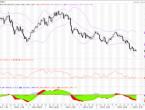
(U.S. crude oil daily chart)

At 12:04 GMT+8, U.S. crude oil was quoted at US$80.40 per barrel.