• English
  • 简体中文
  • 繁體中文
  • Tiếng Việt
  • ไทย
  • Indonesia
Subscribe
Real-time News
February 23 - Gold and silver prices rose in early Asian trading, driven by risk aversion. President Trump announced on Saturday that he would raise a global tariff to 15% to replace several tariffs ruled illegal by the Supreme Court. An ANZ research report noted that Trumps latest move has reignited trade tensions, potentially stimulating safe-haven buying and supporting gold and silver prices.1. Monday: ① Data: 17:00 Germany February IFO Business Climate Index; 23:00 US December Factory Orders MoM; 23:30 US February Dallas Fed Business Activity Index. ② Events: Iran finalizes draft agreement with the US; 21:00 Fed Governor Waller speaks. ③ Holiday: Japanese stock market and mainland China market closed; northbound and southbound trading closed. 2. Tuesday: ① Data: 09:00 China Loan Prime Rate; 19:00 UK February CBI Retail Sales Balance; 22:00 US December FHFA House Price Index MoM; 22:00 US December S&P/CS 20-City Composite Home Price Index YoY (Unadjusted); 23:00 US December Wholesale Sales MoM; 23:00 US February Conference Board Consumer Confidence Index; 23:00 US February Richmond Fed Manufacturing Index. ② Events: Domestic refined oil price adjustment; US President Trump delivers State of the Union address; 01:30 ECB President Lagarde speaks; 13:00 New 15% global tariffs from the US take effect; 22:10 Fed Governor Waller speaks; 22:35 Fed Governor Lisa Cook speaks on AI. 3. Wednesday: ① Data: 05:30 US API crude oil inventories for the week ending February 20; 08:30 Australia January unadjusted CPI year-on-year rate; 15:00 Germany March GfK consumer confidence index, Germany Q4 unadjusted GDP year-on-year final reading; 17:00 Switzerland February ZEW investor confidence index; 18:00 Eurozone January CPI data; 23:30 US EIA crude oil inventory data for the week ending February 20. ② Events: 00:00 Apple Inc. 2026 Annual Shareholder Meeting; 04:15 Federal Reserves Barkin and Collins jointly attend a panel discussion; 09:20 300 billion yuan of MLF and 400 billion yuan of 14-day reverse repos mature; 16:40 RBA Governor Bullock participates in a fireside chat. 4. Thursday: ① Data: 18:00 Eurozone February Industrial Sentiment Index and Economic Sentiment Index; 21:30 Canadas Q4 Current Account; 21:30 US Initial Jobless Claims for the week ending February 21; 23:30 US EIA Natural Gas Storage for the week ending February 20. ② Events: 05:00 Nvidia releases earnings report after US market close; 06:00 Nvidia earnings call. Baidu releases earnings report before US market open (pending); 20:30 Baidu earnings call. 5. Friday: ① Data: 08:01 UK February GfK Consumer Confidence Index; 15:45 France February CPI (preliminary), Q4 GDP (final); 16:00 Switzerland February KOF Leading Economic Indicator; 16:55 Germany February Seasonally Adjusted Unemployment Change, Unemployment Rate; 21:00 Germany February CPI (preliminary); 21:30 Canada December GDP (monthly); 21:30 US January PPI (yearly); 22:45 US February Chicago PMI; 23:00 US December Construction Spending (monthly). ② Event: 15:00 MSCI China Index February adjustment takes effect. ③ Holiday: Taiwan stock market closed. 6. Saturday: ① Data: 02:00 US Total Oil Rig Count for the Week Ending February 27. ② Event: Berkshire Hathaway Earnings Report. 7. Sunday: ① Event: OPEC+ Meeting.February 23 – The 9th Congress of the Workers Party of Korea continued on February 22. The meeting discussed and revised the Workers Party Constitution and elected members of the Central Leadership. The Congress expressed its full support for and endorsement of the proposal to re-elect Kim Jong Un to the highest position in the Workers Party of Korea, and elected him as General Secretary of the Workers Party of Korea. The meeting also elected members and alternate members of the Central Committee of the Workers Party of Korea. Kim Jong Un, Pak Thae Song, Jo Yong Won, Ri Il Hwan, and 139 others were elected as members of the Central Committee of the Workers Party of Korea.February 23 - Analysts say that as skepticism surrounding artificial intelligence grows, Wall Street is increasingly worried that the chip giants earnings this week will drag down its stock price. Nvidias stock has been trading sideways for months, rising only 1.7% since the beginning of the fourth quarter of last year, slightly below the S&P 500s 3.3% gain over the same period. Nvidias recent lackluster performance is largely due to increased investor concerns about spending hundreds of billions of dollars on AI development, leading to capital outflows from large-cap tech stocks. However, the stock market also faces numerous external risks, including geopolitical instability and reduced expectations of interest rate cuts. All of this puts Nvidia in a delicate position when it releases its fourth-quarter and fiscal year results on Wednesday. Investors expect its results to far exceed Wall Street expectations and raise forecasts for the coming quarters. But the company may have little to do or say to drive a meaningful rise in its stock price. Nvidias stock price has fallen after its last two earnings releases.February 23 - On February 22, local time, Greenlands Prime Minister Jens-Frederic Nielsen stated on social media that Greenland has no intention of accepting a hospital ship that US President Trump planned to send to the island. Nielsen posted on Facebook that day, "The answer here is: No, thank you." He stated that Greenlanders enjoy free healthcare, a system that is a "basic component" of local society, "unlike the United States, where you have to pay for medical care."

Oil Prices Fall Due to U.S. Rate Hikes And China

Haiden Holmes

Nov 18, 2022 11:44

119.png


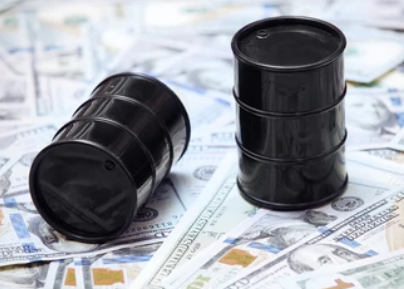
On Thursday, oil prices fell by more than 3% as mounting COVID-19 cases in China and anticipation of more aggressive U.S. interest rate hikes impacted demand.


Brent crude fell $3.08 per barrel, or 3.3%, to close at $89.78 per barrel. The price per barrel of U.S. West Texas Intermediate (WTI) crude oil decreased by $3.95, or 4.6%, to $81.64.


Dennis Kissler, senior vice president of trading at BOK Financial, commented, "It's equivalent to a triple whammy: an increase in COVID-19 cases in China, rising interest rates in the U.S., and now technical weakness in the market."


President of the Federal Reserve Bank of St. Louis, James Bullard, claimed that a basic monetary policy rule would need interest rates to increase to at least 5%, while stronger assumptions would require rates to exceed 7%.


As investors reviewed U.S. economic data, the value of the dollar rose. The price of oil priced in dollars increases for holders of other currencies when the dollar strengthens.


China reported daily rises in COVID-19 infections, and Chinese refiners allegedly sought a decrease in Saudi crude exports in December, while crude purchases from Russia stalled.


Despite the fact that China has fewer COVID instances than other countries, the world's largest importer of petroleum maintains strict regulations to control early outbreaks, hence cutting gasoline use.


On the basis of technical indicators, U.S. front-month futures fell below the 50-day simple moving average, leading to fund liquidation, Kissler said, adding that he expects the pressure to persist into the start of the next week.


Phil Flynn, an analyst at Price Futures Group, stated, "The market is becoming acutely aware of the potential for massive demand destruction, and sentiment is clearly swinging to the downside."


Wednesday, Poland and NATO declared that a missile that landed in their country was likely a stray shot by Ukraine's air defenses and not a Russian strike, assuaging fears that the Russia-Ukraine confrontation may intensify.


Craig Erlam, a senior market analyst at OANDA, stated, "Thank god, these concerns have abated and the situation has deescalated, resulting in oil price declines." China is an immediate downward risk for oil.


According to government statistics, oil stockpiles in the United States decreased by more than 5 million barrels in the most recent week. [EIA/S]


As OPEC and its allies, often referred to as OPEC+, implement their most recent output cuts to boost the market, the November supply is also tightening.