• English
  • 简体中文
  • 繁體中文
  • Tiếng Việt
  • ไทย
  • Indonesia
Subscribe
Real-time News
February 10th - Overnight, US stocks rose slightly, while Hong Kong stocks continued their strong performance from yesterday, breaking through the 10-day moving average at the open. The Hang Seng Index opened 175 points higher at 27202, before slightly retreating to 109 points. Subsequently, driven by capital inflows, it surged as much as 370 points to a high of 27397. At the close, the Hang Seng Index rose 0.54% in the morning session, while the Hang Seng Tech Index rose 0.84%. The total turnover of the Hang Seng Index market was HK$133.82 billion. On the sector front, artificial intelligence continued its strong upward momentum, with film, pharmaceutical outsourcing, and biopharmaceutical stocks leading the gains. Semiconductor stocks rose for the second consecutive day. Education, aviation, tourism, and dairy stocks were weak, while mainland property stocks retreated. In terms of individual stocks, Lexin Outdoor (02720.HK) surged over 121.8% on its first day of trading, Zhipu (02513.HK) rose over 21%, and CSPC Pharmaceutical Group (01093.HK) gained over 6%; New Oriental (09901.HK) fell 4.7%, and Meituan (03690.HK) and Haidilao (06862.HK) both dropped 3%.On February 10th, according to Qichacha APP, Guangzhou Xiaopeng Motors Technology Co., Ltd. recently applied for and published a patent for "Humanoid Robot Control Method, Device, and Humanoid Robot". The patent abstract shows that this invention relates to the field of robot control technology, specifically to a humanoid robot control method, device, and humanoid robot. The method involves acquiring upper body posture data corresponding to the operator; this upper body posture data includes pitch, tilt, and yaw data; performing component processing on the upper body posture data to generate target upper body posture data corresponding to the humanoid robot; acquiring the current upper body posture data corresponding to the humanoid robot; and controlling the humanoid robot based on the target upper body posture data and the current upper body posture data. This forms a closed loop of "acquisition-processing-feedback-control", dynamically correcting posture deviations to ensure the robot accurately replicates the operators intentions while also considering motion smoothness and operational stability.February 10th – The first meeting of the China-Cambodia Public-Private Sector Dialogue Mechanism was held on February 9th in Phnom Penh, the capital of Cambodia. Cambodian Deputy Prime Minister Sun Chanthol and other government officials and business representatives from both countries attended the meeting. Sun Chanthol expressed his gratitude to Chinese enterprises for their outstanding contributions to Cambodias economic and social development and hoped that both sides would actively respond to the demands of Chinese enterprises in Cambodia through the dialogue mechanism, creating a favorable environment for Chinese enterprises to expand their investment in Cambodia. Chinese Ambassador to Cambodia Wang Wenbin stated that this meeting has set a good precedent for the smooth operation of the China-Cambodia Public-Private Sector Dialogue Mechanism and hoped that both sides would continue to uphold the spirit of pragmatism, professionalism, and cooperation to safeguard and develop the common interests of China and Cambodia. At the meeting, China and Cambodia exchanged frank and in-depth views on resolving issues faced by Chinese enterprises in Cambodia, including taxation, customs clearance, and labor issues.On February 10th, five departments—the Ministry of Industry and Information Technology, the Ministry of Science and Technology, the Ministry of Housing and Urban-Rural Development, the State Administration for Market Regulation, and the State Intellectual Property Office—jointly issued the "Guideline for the Construction of a Standard System for the Science and Technology Service Industry (2025 Edition)." The guideline proposes that by 2027, more than 40 new national and industry standards for the science and technology service industry will be formulated, initially establishing a standard system that meets the high-quality development needs of the service industry, and conducting standard implementation work for more than 1,000 enterprises. By 2030, more than 80 new national and industry standards for the science and technology service industry will be formulated, basically establishing a standard system that meets the high-quality development needs of the service industry, with the effectiveness of standards serving enterprises becoming more prominent.The Federation of Automobile Dealers Associations of India (FADA) predicts that retail car sales will continue to grow steadily over the next three months.

Just How to Read Stock Charts: Quick-Start Guide for Beginners

Ralph Graves

Jan 05, 2022 16:17

Stock market charts do not need to be a secret. Right here's how to review them for any type of stock.


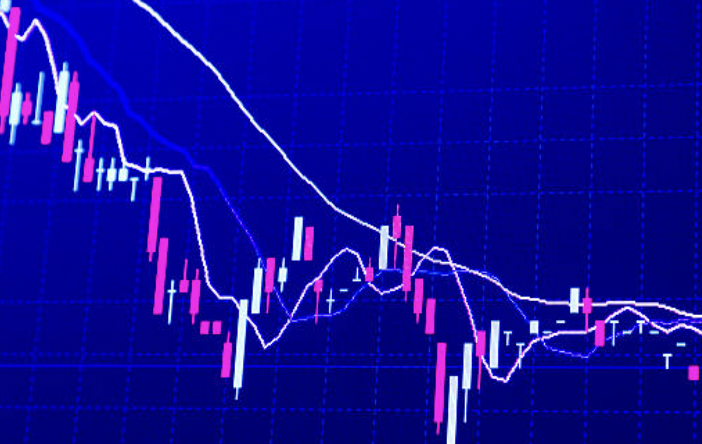
At first glance, stock charts seem a chaotic show of lines, shades, numbers and phrases. As soon as you break them down into specific components, nonetheless, reviewing them becomes a lot more convenient task.


To ensure, knowing just how to perform comprehensive stock analysis isn't a requisite for beginning to invest. But comprehending the basics of stock charts can aid you make financial investment choices more confidently.

Stock chart components

One of one of the most practical methods to learn more about stock charts is through Google Finance. Simply search a business's ticker, and you'll see a straightforward graph that's the equivalent of the shallow end of the swimming pool throughout a swim lesson. (Don't know the company's ticker icon? You can look online for that.).


As an instance, allow's consider Apple (AAPL), currently the biggest stock by weight in the S&P 500.


This chart reveals the stock price was $125.12 at the market close on March 2. Closing rate refers to the last rate a stock traded for during regular market hrs-- 9:30 a.m. to 4 p.m. Eastern Time. Throughout regular trading hrs, the price will likely change. The "after hours" rate is $125.15, reflecting the price the stock was currently being traded for beyond routine hrs.


We can likewise see the stock price "closed" $2.67 lower than it did on the previous trading day (when the close cost was $127.79), implying the rate fell by 2.09%. The red line reveals the various price changes throughout the day, yet picking any of the various other time periods would certainly reveal the various price adjustments throughout that period.


That line, denoting price increases and also lowers over a given period of time, comprises the foundation of a lot of stock charts. The y-axis (vertical axis) shows costs in dollars, while the x-axis (horizontal axis) shows how much time has passed in the chosen duration. In this chart, the gray line demonstrates how the stock is carrying out throughout after-hours trading.

Basic stock chart terms to understand

  • Open, high, low as well as previous close. The open is the very first rate at which a stock trades during normal market hours, while high and low reflect the highest possible as well as lowest rates the stock gets to during those hours, respectively. Previous close is the closing cost of the previous trading day.

  • Market cap. Shown below as "Mkt cap," market cap implies market capitalization, which gauges the dimension of a firm based on the variety of its shares on the stock market multiplied by its current share rate. In Apple's situation, your eyes do not deceive you: That's a market cap of $2.1 trillion-- among the largest on the planet.

  • PE ratio. This stands for price-to-earnings ratio, which some investors may make use of to choose if a stock is undervalued, misestimated or rather valued.

  • Dividend return. Shown right here as "Div yield," reward yield tells you just how much an investor may get yearly in rewards (cash money settlements companies might offer to investors), shared as a percent of the present share price. Apple's quarterly returns for the past four quarters was $0.2050 per share. Multiply that by 4 (for a full-year returns) and you get $0.82, which is 0.66% of its existing share cost of $125.12.

  • 52-wk high and low. 52-week high is the highest rate the stock has actually traded for during the preceding 52 weeks, while the 52-week low is (you presumed it) the most affordable cost the stock has traded for throughout the preceding 52 weeks.

More advanced stock chart terms

Google's graphes are rather bare-bones, making them an excellent location to learn. Once you begin studying more advanced graphes, you'll face a few even more terms worth knowing.

Bid as well as ask 

The bid is the highest price a financier is willing to spend for a stock. If you see, as an example, $124.61 as the bid, capitalists are currently ready to buy the stock at a rate of $124.61 per share. The ask, on the other hand, is the lowest price a capitalist is willing to market a stock for. If you see an ask of $124.65, sellers are currently selling for $124.65 per share.


Note there's a $0.04 distinction between the two-- this is called the bid-ask spread. Normally, when there's high trading task with lots of eager customers and also vendors, spreads will certainly be smaller sized. With much less trading activity (such as throughout after-hours trading or trading in less preferred supplies), bid-ask spreads might be bigger. As well as when spreads are broader, it might be harder for an investor's profession to be carried out, or for the profession to undergo at the cost they wanted. 

Volume, ordinary quantity as well as day's variety

Volume represents the variety of shares that have actually been traded up until now that day, while ordinary volume is the average everyday quantity for a given duration. Day's range shows the highest and also lowest rates the stock has actually traded for approximately the present minute of that trading day.

Beta

Beta demonstrates how volatile a stock's price is compared to the stock market, which may be an indicator of how high-risk the stock is. If beta is more than one, the stock has actually traditionally been a lot more unstable than the stock market (typically represented by either the S&P 500 or a total stock market index) for the specific period. If beta is less than one yet more than no, it's been less unpredictable than the total market for that duration. As always, however, past performance isn't indicative of future efficiency.

EPS (TTM) as well as earnings date

EPS (TTM) represents earnings per share for the last 12 months (or, technically, "trailing 12 months"), and that number is the "E" in PE proportion. You can get this number by separating one of the most lately reported firm earnings by the variety of the business's shares offered on the stock market. The earnings date is the publicly shown window of time for when the company will certainly reveal its newest quarterly profits.

Ex-dividend date

In order to obtain the firm's reward for the next duration, you'll have to end up being a shareholder (that is, get its stock) prior to the ex-dividend date. If you acquire the stock on or after the ex-dividend date, you will not get the reward for that period. As far as returns go, procrastination does not pay.

1-year target estimate

This is a quote of what the stock's cost could be in one year. This analysis commonly represents an agreement of several experts' 1 year price targets, yet be aware that while experts make use of complex estimations to come to their price quotes, it's still simply a projection. And also as anybody that's been irritated with their neighborhood meteorologist understands, forecasts can be wrong.


As you proceed learning more about stock charts, maintain a few points in mind:

  • It's uncommon for a stock to move in one instructions. Swings are regular. 

  • What seems a big spike or slump may not be. Look at the y-axis; costs may vary from a couple of cents' difference to a couple of bucks, depending upon the stock.

  • Even if a stock price is climbing in the short-term, that increase might be a spot amidst a prolonged decline. Look at longer time horizons (one, 3 as well as five years) for a much more full image of trading task.

  • Not all charts will be right for your time perspective. Reading an intraday cost chart, which takes a look at one day's changes, will not make sense for someone that prepares to be invested for 20 years. A day trader, nonetheless, may discover it helpful.