• English
  • 简体中文
  • 繁體中文
  • Tiếng Việt
  • ไทย
  • Indonesia
Subscribe
Real-time News
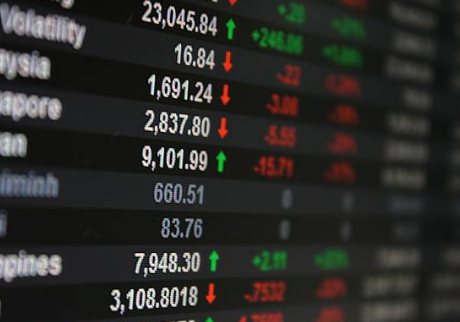
The main contract for 2-year Treasury bond futures (TS) remained unchanged, the main contract for 5-year Treasury bond futures (TF) remained unchanged, the main contract for 10-year Treasury bond futures (T) fell by 0.03%, and the main contract for 30-year Treasury bond futures (TL) fell by 0.12%.At the close of the morning session, domestic futures contracts showed mixed results. Low-sulfur fuel oil (LU) rose nearly 8%, SC crude oil rose nearly 6%, synthetic rubber and fuel oil rose over 4%, container shipping to Europe rose nearly 4%, and liquefied petroleum gas (LPG) rose over 3%. On the downside, Shanghai silver fell over 9%, Shanghai tin and apples fell over 3%, and platinum and red dates fell over 2%.On May 18th, Kazuhiro Sasaki, Head of Research at Philips Securities Japan, stated that at current yield levels, foreign investors may find it easier to buy Japanese government bonds, and he wouldnt be surprised if domestic investors sold foreign bonds and bought Japanese government bonds instead. He said, "From an exchange rate perspective, foreign capital inflows into Japanese bonds could lead to a stronger yen, which could put some pressure on the Japanese stock market." Rising long-term Japanese government bond yields mean that policy rates may rise, which would be a negative factor for the stock market. If interest rates rise too quickly, it will have a significant negative impact on the stock market. This cautious sentiment is intensifying against the backdrop of inflation concerns triggered by rising oil prices.Futures News, May 18th - According to foreign media reports, Malaysian palm oil futures recorded their second consecutive day of gains on Monday, mainly supported by stronger prices in Dalian palm oil, Chicago soybean oil, and crude oil, while the weak ringgit also provided assistance. On the policy and export front, Malaysia has lowered its June reference price for crude palm oil to ensure that export tariffs remain at 10%. Meanwhile, data from inspection agency AmSpec shows that Malaysian palm oil exports from May 1st to 15th are expected to decline by 16.5% compared to the same period last month.On May 18th, Fu Linghui, spokesperson, chief economist, and director of the Department of Comprehensive Statistics of the National Economic Bureau, stated at a press conference held by the State Council Information Office that industrial production growth fluctuated in April, which is a normal monthly fluctuation. Cumulatively, from January to April, the added value of industries above designated size increased by 5.6% year-on-year, maintaining a steady and relatively rapid growth trend. Overall, industrial production is progressing steadily, with continued trends towards high-end, green, and intelligent development. However, it should also be noted that there are currently many external uncertainties, increasing operating cost pressures on enterprises, and some enterprises are still facing difficulties. In the next stage, it is necessary to earnestly implement the spirit of the Central Economic Work Conference and the arrangements of the National Peoples Congress and the Chinese Peoples Political Consultative Conference, focusing on expanding domestic demand, strengthening innovation-driven development, developing new types of productive forces according to local conditions, strengthening the supply of energy and raw materials, alleviating enterprise difficulties, and promoting high-quality industrial development.

Herbert Diess, Volkswagen's main disruptor, runs out of gas

Aria Thomas

Jul 25, 2022 11:18

3.png


Herbert Diess, a former BMW executive, took over Volkswagen (ETR:VOWG p) AG four years ago, when the German automaker was in crisis and under pressure to make substantial changes to its strategy and corporate culture. Diess contributed a new perspective.


Diess left Volkswagen on September 1, three years before his contract was supposed to expire, with many of the goals he established as chief disruptor of the German auto giant still unmet and uncertain.


Diess's intention to build CARIAD, a software business based in Germany, within Volkswagen and Porsche's projected public market offering to help fund VW's electrification expenses are among the most prominent.


Diess was different from past Volkswagen CEOs in both company strategy and personality. He appeared to be the right leader in 2018 to move Volkswagen away from the Dieselgate scandal.


Diess was more interested in pleasing Volkswagen's investors than its labor unions. He thought that large future investments should be made in electric automobiles. He built a hilarious social media presence, and he positioned Tesla Inc (NASDAQ:TSLA) as Volkswagen's benchmark, as opposed to conventional competitors like Toyota Motor Corp or General Motors Co. (NYSE:GM).


Diess's risky product and technology approach, as well as his penchant for expressing his opinions, alienated VW constituencies.


He also occasionally missed the mark.


Diess appeared to invoke a Nazi-era phrase in 2019 when he stated "EBIT makes you free" to emphasize the automaker's earnings potential. Later, he apologized for the comments and stressed that he had no intention of equating them to the Nazi-era slogan "Arbeit Macht Frei," which was displayed on the gates of Auschwitz during the Holocaust.


Diess may be known in the United States as the CEO who reintroduced the famous Volkswagen microbus as an electric car and rejuvenated the Scout truck brand. Volkswagen dealers in the United States were enraged by Diess' remarks about selling Scouts directly to consumers.


Diess openly admired Tesla and its CEO, Elon Musk, who offered Diess the role of CEO at Tesla prior to his decision to join Volkswagen in 2015.

TOOK ON TOUGH TASKS

Diess, who is 63 years old, has held a variety of tough positions throughout his tenure at Volkswagen, including reducing expenses at the company's high-volume Volkswagen brand. Diess was charged by former CEO Martin Winterkorn with lowering the brand's yearly expenditures by €5 billion ($6 billion) within two years, a job that would certainly provoke tension with German labor unions. Diess joined VW in 2015 as head of the Volkswagen brand.


Diess negotiated an agreement to cut 30,000 employees through natural attrition, putting Volkswagen's profitability behind that of its rivals.


Diess appears to have moved too rapidly for some board members and not swiftly enough for others.


Volkswagen's labor leaders, who control fifty percent of the automaker's supervisory board votes, repeatedly fought with him.


However, key stockholders from the Porsche and Piech dynasties were concerned that Diess' multibillion-euro investments in electric vehicles and software development were not generating results rapidly enough.


In May, Volkswagen's board of directors demanded that management present a more robust strategy for the software subsidiary CARIAD. The team's leader told the German newspaper Frankfurter Allgemeine Zeitung earlier this month that the procedure must be streamlined in order to move more rapidly.


Volkswagen's share price implies that investors shared similar concerns. Since Diess assumed leadership in 2018, Volkswagen shares have remained steady and are down 24 percent for the year.


In the past four years, Tesla's market worth has increased from its 2018 level to $844 billion, which is comparable to 10 Volkswagens.


Volkswagen's board of directors has chosen Porsche CEO Oliver Blume, a seasoned VW executive, to succeed Diess. According to some observers, this decision represents a return to the basics and less ambitious intentions to transform the vehicle industry into a technology company.


"His perspective extended well beyond the automobile. Clearly, this resulted in some friction." Silicon Valley venture capitalist Evangelos Simoudis said of Diess:


"When I see Blume enter, I see a car guy once more."