• English
  • 简体中文
  • 繁體中文
  • Tiếng Việt
  • ไทย
  • Indonesia
Subscribe
Real-time News
July 29 – Lawrence Werther, chief U.S. economist at Daiwa Capital Markets, said ahead of Federal Reserve Chairman Warshs press conference today that Warshs remarks should largely maintain the established tone, emphasizing the committees need to assess subsequent data. "I tend to think the committee will hold rates steady today," he said, adding that he expects Warsh to stick to his stance on forward guidance while possibly softening his views on inflation slightly. "Perhaps more importantly, well be able to see whether he continues to hold these kinds of press conferences."Inchcape Shipping Services: Vessels affected by the explosion have been moved out of port, and operations at other berths and terminals are expected to resume overnight.The German DAX 30 index closed down 34.71 points, or 0.14%, at 25,457.88 on Wednesday, July 29; the UK FTSE 100 index closed up 36.18 points, or 0.33%, at 10,907.20 on Wednesday, July 29; the French CAC 40 index closed down 50.51 points, or 0.60%, at 8,408.27 on Wednesday, July 29; European... The Stoxx 50 index closed down 40.16 points, or 0.64%, at 6249.35 on Wednesday, July 29; the Spanish IBEX 35 index closed down 326.14 points, or 1.65%, at 19400.86 on Wednesday, July 29; and the Italian FTSE MIB index closed down 271.19 points, or 0.52%, at 51427.00 on Wednesday, July 29.July 29 (Futures News) – According to foreign media reports, ICE cotton futures fell on Wednesday, dragged down by a stronger dollar, a weak grain market, and profit-taking after recent gains. 1. Contract Prices: The December cotton futures contract fell 0.53 cents, or 0.66%, to 80 cents per pound. 2. Macroeconomic Factors: The dollar rose slightly on Wednesday, approaching a near one-month high, as investors awaited the Federal Reserves interest rate decision, with some analysts expecting an unexpected rate hike. A strong dollar makes cotton more expensive for overseas buyers, thus suppressing export demand. 3. Agricultural Product Linkage: The decline in US corn and soybean prices dampened sentiment in the overall agricultural market after the recent grain rebound. 4. Market View: Kansas commodities analyst Sid Love stated that there is significant uncertainty in the cotton market, and after breaking through the 80-82 cent range, current price movements are mainly driven by fund flows. He suggests paying attention to crude oil prices, believing that as long as oil prices remain strong, no commodity will experience a significant decline. 5. Crude Oil Impact: Oil prices surged nearly 7% on Wednesday due to major airstrikes in the Middle East and a decline in U.S. crude oil inventories. While rising crude oil prices typically provide support for cotton, the strength in the energy market failed to offset the broad downward pressure on cotton.According to Israeli media, an Israeli official said that Netanyahu has told Trump that the goal is to prevent Iran from acquiring nuclear weapons and that he does not intend to push for military options.

Gold market analysis: the Federal Reserve's debt reduction expectation temperature will not decrease, gold continues to be under pressure and shocks

Oct 26, 2021 11:02

The U.S. dollar rose on October 11, soaring energy prices and falling U.S. stocks prompted investors to seek safe-haven assets, and funds tended toward the U.S. dollar. Spot gold continued the trend of rising and falling last Friday, and continued to decline slightly throughout the day.


In the overnight market, the US dollar index rose, and most non-US currencies fell. The US dollar index rose 0.28% to 94.3669. U.S. Treasury yields fell across the board, with 10-year U.S. Treasury yields falling 4.82 basis points to 1.570%. The market is paying more attention to whether the Fed will reduce the scale of bond purchases in November. At present, the non-agricultural employment data is disappointing, but the Fed has not been affected. The market expects to reduce the scale of debt purchases in November is still strong. On the other hand, soaring energy prices intensified inflationary pressures, and the U.S. dollar attracted a large amount of capital inflows, which further increased expectations for tightening monetary policy this year. Recent data has made people worry that the US economy will take longer than expected to recover the remaining 5 million jobs lost due to the new crown epidemic, and factors such as high inflation and the continued existence of the new crown epidemic will weaken growth. But San Francisco Fed President Daley said on Sunday (October 10) that she did not believe that the epidemic would lead to an economic recession, and that it was too early to say that the economy "stalled". Daly said that I have always believed that Delta will cause losses, and that it has already caused losses, but it has not derailed us and will not plunge us into another economic recession. With the development of the new crown epidemic, the economy is also developing. "European Central Bank President Lagarde told the German media recently that the European Central Bank is paying close attention to wage dynamics and ensuring that inflation expectations are anchored at 2%. Damage the economic recovery and employment in the Eurozone. "Compared with the Fed, the European Central Bank’s demand for inflation has changed from "fear" to "unwanted". Lagarde also emphasized that "should not overreact" at this time, indicating that it pays more attention to achieving the 2% target in the medium term. Supply shocks will also be more calm. Therefore, even if inflation is high, the European Central Bank will tolerate inflation higher than 2% for a longer period of time than the Fed. The Fed seems to be preparing to reduce stimulus measures. The United States’ inflation-adjusted "real" yield is negative. But it is still better than Europe. Given that the European Central Bank is not in a hurry to tighten policy, this gap may widen, so the relative economic advantage supports the US dollar. In addition, December 3 is the delayed debt ceiling deadline, although it is unlikely, but If there is a default, it will undoubtedly be catastrophic to the economic outlook. By then, the US dollar is expected to gain new favor, and gold is likely to usher in a new round of decline.

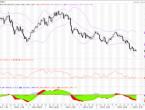
Looking at the daily line: the daily moving average crosses down, and the overall state is still bearish. Although it rose after the non-agricultural period on Friday, it was also blocked near the 40-day line at 1780, indicating that the current market is very unstable in terms of sentiment. At present, gold is fluctuating up and down in the short-term moving average belt of 1760. The short-term market may repeatedly compete up and down. At the beginning of this week, it is expected that the market will have a high probability of digesting the "roller coaster" market of last Friday, and there will be a high probability that it will continue. After a short rebound and reconfirming the pressure, the market returned to weak and volatile.

Bank of China Guangdong Branch Wang Gang

Original title: 20211012—The Fed's expected debt reduction temperature remains unchanged, and gold continues to be under pressure and shocks

Source: Bank of China official website