• English
  • 简体中文
  • 繁體中文
  • Tiếng Việt
  • ไทย
  • Indonesia
Subscribe
Real-time News
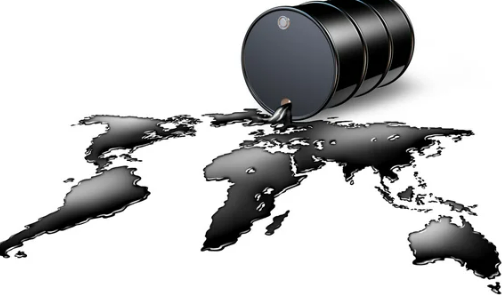
February 16th - On February 15th local time, Hungarian Foreign Minister Szijjártó posted on his personal social media that, due to Ukraines continued suspension of transit transport through the "Friendship" oil pipeline, Hungary and Slovakia have sought assistance from Croatia, hoping to transport Russian crude oil via the "Adriatic" pipeline. Szijjártó stated that Hungary and Slovakia had previously secured the right to continue purchasing cheap Russian crude oil through the "Friendship" pipeline, and this sanction exemption also includes the option of purchasing Russian crude oil by sea if transit via the pipeline becomes unfeasible.Domestic News: 1. Wang Yi meets with Canadian Foreign Minister Anand. 2. 2026 Spring Festival film pre-sales exceed 400 million yuan. 3. The Cyberspace Administration of China announces the fourth batch of 7 financial information service institutions. 4. The Chinese Consulate General in Osaka reminds Chinese citizens in its consular district to strengthen security precautions. 5. Heilongjiang Province issues the "Heilongjiang Province Artificial Intelligence+ Government Affairs Deepening Application Work Plan". 6. Qiushi magazine publishes an important article by General Secretary Xi Jinping entitled "Key Tasks of Current Economic Work". 7. Ministry of Foreign Affairs: China decides to implement a visa-free policy for holders of ordinary passports from Canada and the United Kingdom starting February 17. 8. Guotou UBS Silver LOF compensation plan released: losses under 1,000 yuan will be fully compensated, and online processing will be available starting February 26. International News: 1. Tajikistan reportedly plans to launch gold ATM services. 2. European Central Bank President Lagarde opposes using taxes to prevent capital outflows. 3. Musk: Optimus robots will change human life starting next year. 4. According to Axios: The US Department of Defense threatens to cut off cooperation with Anthropic. 5. Obama responds to Trumps mockery of Ukraine as an ape: The "sense of shame" and "manners" that once bound American public officials have now vanished. 6. EU High Representative for Foreign Affairs and Security Policy Karas: It seems that EU countries are not yet ready to give Ukraine a specific date for joining the EU. 7. US-Iran negotiations—① According to the BBC: Iran is prepared to consider compromises to reach a nuclear agreement if the US is willing to discuss lifting sanctions. ② A senior Iranian official confirmed that the second round of indirect negotiations with the US will be held in Geneva on Tuesday. ③ Irans Deputy Foreign Minister: Iran and the US have included issues such as oil and gas, mineral investment, and even aircraft procurement in the negotiating text. ④ Iran reiterates that its right to peaceful use of nuclear energy is inalienable.February 15th - Nick Timiraos, a vocal advocate for the Federal Reserve, wrote that key indicators of the U.S. economy are pointing in the same positive direction: inflation is declining, the labor market remains strong, and economic growth is solid. This is not a definitive conclusion, but it represents the closest the U.S. economy has ever come to a soft landing (i.e., curbing inflation while avoiding a recession). Just four years ago, many economists thought this was impossible. Now, the scenario of the U.S. economy bringing inflation back to the Feds 2% target without falling into recession is once again credible. However, even without oxygen masks, its too early to unfasten the seatbelts. The Feds preferred inflation gauge, the core PCE annual rate, is currently close to 3%, and many forecasters expect little progress in inflation this year as tariff-related price increases spread further. Meanwhile, the labor market may not be as robust as last weeks report suggested. Payden & Rygels chief economist, Jeffrey Cleveland, stated that objectively speaking, the labor market has been weak, and the unemployment rate is more likely to rise than fall this year.February 15th - European Central Bank President Christine Lagarde stated during a panel discussion at the Munich Security Conference on Sunday that current market developments indicate investors are interested in allocating more capital to Europe. Creating incentives for European investment is a better approach than using taxes to prevent capital outflows. Lagarde believes that US President Trumps disruptive trade policies serve as a "spur" for Europe to accelerate economic reforms. Beyond economic challenges, this has also brought European leaders closer together. She stated that the EUs €90 billion ($107 billion) support package for Ukraine demonstrates that the union can drive meaningful decision-making even if not all member states support an agreement.U.S. Secretary of State Marco Rubio: The United States has taken note of reports from various countries assessing the poisoning of prominent Russian opposition politician Alexei Navalny. The United States does not question this assessment, nor is there any reason to question it.

Gold Falls to Its Lowest Level in A Month on Rate Hike Uncertainties

Haiden Holmes

Feb 10, 2023 11:16

29.png


Gold prices hovered near a one-month low on Friday, under pressure from rising short-term yields, and were heading for a second consecutive weekly loss as markets revised their expectations for additional Federal Reserve interest rate hikes.


The yellow metal struggled to rebound from last week's steep losses, its worst week of the year to date. Fed Chair Jerome Powell and several other speakers cautioned that interest rates will likely continue to increase.


However, overnight statistics on unemployment claims that were higher than anticipated provided a mixed picture of the labor economy, considering that a strong nonfarm payrolls reading for January shook gold markets last week.


At 19:39 E.T., spot gold was unchanged at $1,861.76 per ounce, while gold futures declined 0.3% to $1,878.0 per ounce (00:39 GMT). This week, both assets were projected to lose around 0.2%.


The likelihood of a U.S. recession increased as a developing inversion in the yield curve signaled economic distress. As short-term yields increased, so did the pressure on non-yielding assets like gold.


As investors reevaluate their expectations for additional interest rate hikes by the Federal Reserve, the gold rally that began the year appears to have lost steam. While a prospective U.S. recession is projected to help gold in the long run, increasing interest rates could present the metal with greater short-term difficulties.


Other precious metals were similarly impacted by yield increases. Futures for platinum declined 0.1% to $959.65 per ounce, while futures for silver plummeted 0.9% to $21.940 per ounce. Likewise, both metals were destined for substantial weekly falls.


Fears of a coming recession were offset by optimism for a demand recovery in China, the world's top importer of the red metal. Copper prices were expected to experience a subdued week among industrial metals.


Futures for high-grade copper slipped 0.1% to $4.0635 a pound and were expected to finish the week essentially unchanged.


This week's focus is on Chinese inflation data to determine whether spending increased in January following the country's easing of most anti-COVID regulations. The rebound of business activity in January was relatively mixed, according to figures released last week.