• English
  • 简体中文
  • 繁體中文
  • Tiếng Việt
  • ไทย
  • Indonesia
Subscribe
Real-time News
On August 24th, Nikkei reported that the Japan Green Transition Accelerator (GX) has invested a total of 20 billion yen (approximately US$125 million) in public-private partnership funding for two startups focused on nuclear fusion and plastic recycling. This investment is part of a broader Japanese government plan to inject 370 trillion yen (over US$2.3 trillion) in public and private funds into 17 strategic sectors by fiscal year 2040, a key pillar of Prime Minister Sanae Takaichis growth and decarbonization strategy. The two companies being invested in are Kyoto Fusion Engineering Co., Ltd. and Jeplan Corporation. Details of the investment are expected to be announced soon. Japan hopes to encourage more private sector investment and accelerate the commercialization of advanced technologies by providing public capital.According to Nikkei Asia: Japan is providing $125 million in support to nuclear fusion and recycling startups through a public-private partnership fund.On August 24, according to Irans official news agency IRNA on August 23, Iranian President Pezechzian stated at an event in Tehran on the evening of August 22 that members of Irans Supreme National Security Council all believed that the memorandum of understanding previously reached with the United States was the best solution based on dignity, wisdom, and national interests. The memorandum "contains no clause indicating Irans surrender or concessions," and all related commitments were to be fulfilled by the other side. However, Iran should also rationally extricate itself from its current state of "neither war nor peace," as it is difficult for Iran to attract investment in such a state. He also mentioned that the late Supreme Leader Ali Khamenei had clearly stated the necessity of moving away from this "neither war nor peace" state. Pezechzian further stated that Supreme Leader Mojtaba Khamenei formulated national policies, and the government will continue to advance related work in accordance with these policies.August 24 - The Hawke Fire, a wildfire in the suburbs of Reno, northern Nevada, spread rapidly from the foothills of the Sierra Nevada Mountains toward downtown Reno early this morning, burning more than 10,500 acres and issuing mandatory evacuation orders to nearly 14,000 residents.August 24th - According to a report from the U.S. Central Command on August 23rd, the U.S. guided-missile destroyer USS John Finn is currently sailing in the Arabian Sea, carrying out the U.S. maritime blockade mission against Iran. As of August 23rd, the U.S. military has ordered 70 merchant ships to change course, rendered 3 merchant ships immobile, and boarded and inspected 2 other merchant ships.
Binance’s books are a black box, filings show, as crypto giant tries to rally confidence

Lorna Divakar

Dec 20, 2022 17:54

微信截图_20221220110152.png


The exchange claimed that due of its strong financial position and "we take our role as a custodian seriously," it managed net outflows of over $6 billion over 72 hours last week without "breaking stride." Changpeng Zhao, the founder of Binance, claimed his company would "lead by example" in adopting openness following the demise of competitor exchange FTX last month.


The core of the company, the massive Binance.com exchange that has handled trades worth over $22 trillion this year, is largely concealed from the public gaze, according to a Reuters review of Binance's corporate papers.


Binance refuses to disclose its location or that of Binance.com. It withholds basic financial data including revenue, profit, and cash on hand. The business has its own cryptocurrency, but it won't say what impact it has on the balance sheet. Customers can trade on margin using borrowed funds and receive loans secured by their crypto assets. However, it doesn't go into depth about the size of those bets, how exposed Binance is to that risk, or how much money it has set aside in reserves to pay for withdrawals.


Unlike its American rival Coinbase, which is listed on the Nasdaq, Binance is not obligated to release comprehensive financial statements because it is not a publicly traded corporation. Industry records also suggest that Binance hasn't raised outside funding since 2018, so it isn't now required to disclose financial details to outside investors.


Binance has aggressively resisted oversight, as Reuters revealed in October. According to corporate texts and interviews with former workers, consultants, and business partners, Zhao authorized a proposal by lieutenants to "insulate" Binance's main operation from U.S. regulatory scrutiny by establishing a new American exchange. Zhao asserted that the unit was established with the help of reputable law firms but denied having approved the proposal.


Since Binance accounts for more than half of all trading volume in the cryptocurrency market, U.S. officials are particularly interested in how it does business. According to Reuters, some prosecutors think they have enough evidence to indict Binance and certain top executives. The business is under investigation by the U.S. Justice Department for potential money-laundering and sanctions violations.


Reuters examined papers made by Binance entities in 14 jurisdictions where the exchange claims to have "regulatory licenses, registrations, authorisations, and approvals" in an effort to examine Binance's financial records. Several member states of the European Union, Dubai, and Canada are among these places. The authorizations have been noted as significant steps in Binance's "road to become completely licensed and regulated around the world," according to Zhao.


According to the documents, these units seem to have provided authorities with only a limited amount of information on Binance's operations. For instance, the amount of money moving between the units and the main Binance.com exchange is not disclosed in the public reports. Several of the units appear to be inactive, according to the Reuters study.


These neighborhood firms, according to former regulators and officials from Finance, are merely window decoration for the major uncontrolled market.


John Reed Stark, a former director of the U.S. Securities and Exchange Commission's Office of Internet Enforcement, claimed that the group was "coopting the language of regulation to create a façade of legality." Even more so than FTX's operations, according to Stark, are Binance's. In regards to its financial situation, "there is simply no transparency, no sunlight, and no proof of any type."


The analysis by Reuters of the filings for the units in the 14 jurisdictions, according to Binance Chief Strategy Officer Patrick Hillmann, was "categorically untrue." The quantity of financial and corporate information that must be revealed to regulators in such markets is enormous, he said, and frequently necessitates a six-month disclosure process. Comparing the exchange to privately held businesses like American confectionery producer Mars, he stated, "We are a private company and are not compelled to reveal our corporate finances." Mars responded in a statement that comparing its corporate governance and financial reporting standards to Binance's was "absurd," and that its products and services are "extremely regulated."


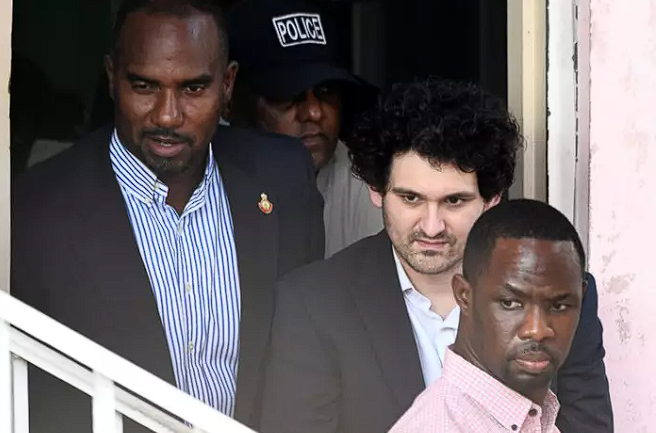
Hillmann further pointed out that the creator of FTX is facing fraud charges from American authorities. He asserted that "it would have been fraud regardless of what regulations were in place" if those charges are accurate.