• English
  • 简体中文
  • 繁體中文
  • Tiếng Việt
  • ไทย
  • Indonesia
Subscribe
Real-time News
JPMorgan Chase: The Federal Reserve is expected to raise interest rates by 25 basis points in December 2026, compared with previous forecasts that interest rates would remain unchanged this year.July 30th - On Thursday, demand at the auction of Japanese two-year government bonds was lower than the 12-month average, as the market widely anticipated a tightening of monetary policy by the Bank of Japan. The subscription multiple was 3.63, compared to 4.82 at the previous auction, and the 12-month average is 3.81. Another sign of weak investor interest was the tail spread (the difference between the average bid and the minimum acceptable bid) at 0.007, compared to 0.005 last month. Recently, yields on short-term Japanese government bonds, which are more sensitive to monetary policy, have risen due to increased oil prices caused by tensions in the Middle East and heightened concerns about fuel inflation. The two-year yield has now risen to 1.47%, close to the high of 1.52% reached earlier this month. This further increases pressure on the Bank of Japan to raise interest rates.On July 30th, according to foreign media reports, Malaysian palm oil futures fell slightly on Thursday, marking their third decline in four trading days, mainly dragged down by weaker prices of competing edible oils and crude oil. The benchmark October palm oil contract on the Bursa Malaysia Derivatives Exchange fell 16 ringgit, or 0.34%, to 4,648 ringgit per tonne (approximately US$1,137.82) in early trading. Despite escalating tensions in the Middle East and the US-Iran conflict spreading beyond major fronts, oil tankers continued to leave the region, causing oil prices to give back some of their gains. Weaker crude oil futures reduced the attractiveness of palm oil as a biodiesel feedstock. The ringgit strengthened slightly by 0.07% against the US dollar, making it slightly more expensive for buyers holding foreign currency to purchase the commodity. According to documents from the Indonesian Ministry of Energy, the country has increased its 2026 biodiesel quota using palm oil as a feedstock to 16.75 million kiloliters to meet the increased demand from the B50 biodiesel blending policy launched earlier this month.Shunichi Suzuki, Secretary-General of the Democratic Party of Japan: The goal is to submit a tax reduction bill during the autumn Diet session.The bid-to-cover ratio for Japans 2-year government bonds was 3.63, lower than the 4.82 achieved in the previous issuance in June.

Best Time To Trade When Double Bottoms Coming

Eden

Oct 25, 2021 14:08

内1.png


What is a Double Bottom?

A double bottom pattern is a technical analysis charting pattern that describes a change in trend and a momentum reversal from prior leading price action. It describes the drop of a stock or index, a rebound, another drop to the same or similar level as the original drop, and finally another rebound. The double bottom looks like the letter "W". The twice-touched low is considered a support level.


The double bottom chart pattern is found at the end of a downtrend and resembles the letter "W"(see chart below). 


Price falls to a new low and then rallies slightly higher before returning to the new low. Unable to push price to a new lower low to continue the downtrend, sellers give up and price bounces sharply from this area.The bullish confirmation is specified by a break in the key price level situated at the high point between the ‘bottoms’ resistance level (neckline).


W底英文1.png


Similarly, the double top pattern reciprocates the double bottom pattern signaling a bearish reversal. Instead of the confirmation being shown at a break in the key resistance level, the double top occurs at the key support lows between the two high points. The double bottom and double top patterns are powerful technical tools used by traders in major financial markets including forex.


The double bottom is frequently used in the forex/gold and equity markets as buy/bullish signals. 


For example

1. Gold

The gold price trend in the first half of this year perfectly presented the  double bottom pattern.

W底英文2.png

As shown in the figure, since January 2021, the price of gold has continued to fall.It fell to a new low (point A) near $1,67.75 in March, then rebounded slightly from the low point, and then fell back to a level close to the last low of $1,699.75 (point B).


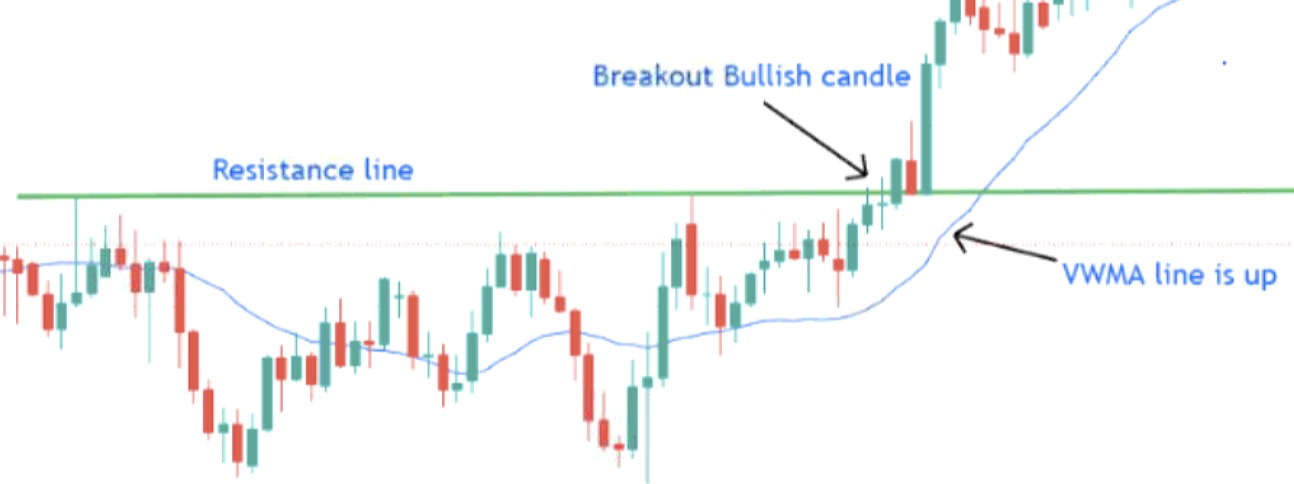
This example shows the neckline break confirmation entry signal whereby the price closes above the neckline which will then indicate a long entry.The highlighted candle in the image above clearly closes above the neckline after some resistance, indicating a stronger push by bulls to push the price up.


As shown in the figure below, after breaking through $1,800 per ounce in April (C point), gold has risen all the way. In June, the price of gold regained $1,900.

图4.png


2. USD/SGD

As shown in the figure below, observing the USD/SGD price trend weekly chart, you can see that the bottom of W has also been formed.

图5.png


Investors can observe the USD/SGD price trend in the market outlook and judge what happens to the price after the end of “W”.


3. Gas


As shown in the figure below, observe the weekly chart of natural gas price trends, and the“ W” will be formed around May 2020.


The first price low was at point A, around $1.58, then the price rebounded to point B, at $2.06, and then again fell back to point C near the last low of $1.58.


After the price successfully broke the neckline (point B) at $2.06, the price of natural gas continue to rise.

图6.png


How to identify a double bottom pattern?

1. Identify the two distinct bottoms of similar width and height.

2. Distance between bottoms should not be too small - time frame dependent.

3. Confirm neckline/resistance price level.

4. Use other technical indicators to support double bottom bullish signal such as moving averages and oscillators.

5. Be wary of trading against strong trends.


It is important to note that trading against a strong downward trend should be approached with caution even with a double bottom formation. Convincing supporting factors should be aligned and confirmed before entering the market. Even with these factors, proper risk management is essential in any trade to avoid excessive losses.