As a trader, your primary responsibility is to manage risk. At all times, you must maintain control and limit risk. This should be your major goal. If the risk can be minimized, traders can increase their chances of profiting in the market. Everything else takes a back seat to it.
This is a tough notion for some traders to grasp, yet it is a necessary component for market success. It should be remembered that risk management is not a method of loss avoidance. There is no system on the planet that does not experience losses. Our risk management strategy attempts to keep losses minimal in comparison to rewards. Because a significant loss is harsh and frequently unrecoverable, most successful traders believe in the notion of little losses.
Avoid mental stops by trading with a hard stop loss.
Placing a hard stop loss with each transaction is one of the finest strategies for traders to limit their risk exposure in the markets. Don't simply think about a stop loss; actually make the order that might prevent a minor loss from turning into a long-term losing position.
A hard stop loss is in effect in the market and will be activated when prices hit that level. It is fully automated and does not need the trader to do anything further after it is placed. Proper stop-loss placement is critical and is generally decided by analysis that identifies when you will be incorrect on the deal.
A mental stop loss is often described as a level at which a trader has chosen to leave the trade but has not placed a market stop loss order. This is an emotional halt loss order. The hard stop loss order is not; instead, it is generally based on some form of market analysis or trading system approach.
The biggest problem with a mental stop is that it is open-ended and allows the trader too much wriggle space. When a mental stop is reached, a trader may often rationalize continuing to trade even if they know it is not in their best interests to do so. A hard stop pushes you to exit the transaction and eliminates some of the psychological hurdles that come with losing money.
Leverage is your friend unless it’s excessive
There is no assurance that you will earn money while trading the FX markets. However, I can practically promise that if you don't handle leverage sensibly, you'll blow up your account at some time throughout your trading career. This is not intended to frighten you, but rather to prepare you so that you may develop a healthy respect for leverage.
Implementing a high leverage method may earn the trader a lot of money in a short amount of time...if they get the transaction right...but it can also result in a loss large enough to wipe out your trading capital.
What is the advantage of earning a significant profit on a highly leveraged transaction only to lose all of the gains or more?
Volatility is required for success, but it must be manageable.
This is a risk-management guideline that some new traders get mixed up about. To begin with, some volatility is beneficial since it enables traders to profit from modest price movements. To put it another way, if a market did not move, no one would trade it. Trading in a market with low volatility may sometimes result in losses. Not only from the market, but also from the hefty transaction expenses.
You can't always avoid a volatile situation, such as when unexpected news is revealed, which is why we utilize strong stop losses. Jumping into a market knowing that an economic report is coming out is the kind of volatile trading approach you want to avoid. Don't assume you can forecast the direction of a market by reading a headline. Allow market circumstances to determine whether it is advisable to initiate a trade in response to a turbulent reaction to news or a report.
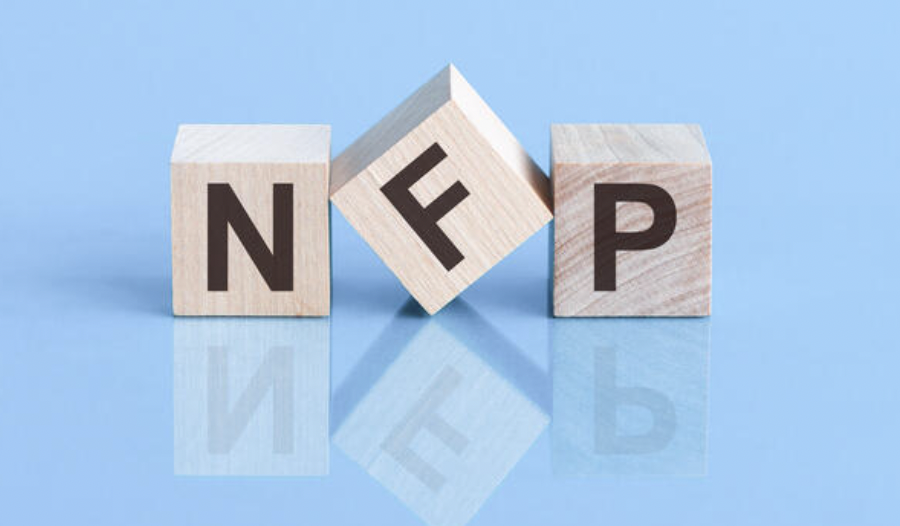
A few examples are the US Non-Farm Payrolls report, which is released on the first Friday of each month. A Central Bank rate statement is another example.
Both of these sorts of news disclosures are widely anticipated by the market and may result in significant up and down swings after the announcement.
Both of these situations have been known to cause two-sided or whip-saw trading. For example, the Non-Farm Payrolls report may show a positive payrolls figure but a negative unemployment rate. A central bank might decide to keep its benchmark interest rate steady and then release a policy statement that is either hawkish or dovish.
You might wind up buying and selling to yourself if you get caught on the wrong side of a news or a central bank pronouncement.
Determine a Safe Fixed Percentage of Your Account to Risk.
The amount of money at risk each transaction is a personal decision that goes hand in hand with establishing a stop-loss order. I am not in favor of a strict 1% or 2% guideline. I believe a trader should consider the amount of his trading capital, determine how much money he is comfortable risking, and then compute the percentage of the trading account. You'll frequently discover that it's far lower than 2%, and maybe even less than 1%. Following that, trade mathematics takes over, and you either have enough to cover a few little losses or you don't.
As I previously said, avoiding large losses while trading is the key to success. Not completely avoiding losses. When you trade a set percentage, you really reduce the dollar amount of risk every trade after a loss and increase the dollar amounts if you win. If your trading system or you are a streaky trader, this is critical.
As I previously said, once you've determined the amount you're willing to risk, the rest is just arithmetic. The goal of risking less money when you lose or are on a losing streak is to keep your account from blowing up before you achieve a winning streak. Then, if you're on a winning run, you're putting more money at risk in order to multiply your earnings.
By following it, you will be reasonably secure from blowing up your account as a result of a black swan occurrence or just a succession of poor transactions. Many rookie traders overlook the very negative impact of a huge drop on recovery. For example, a 20% drop needs a 25% return in order to recoup and break even. A 30 percent drop requires a 42 percent recovery to break even. And a 50% drop requires a stunning 100% return to recoup and break even.
Higher time frames are used to begin trading from the top down.
One form of risk that many traders do not mention sufficiently is the risk of overtrading. Traders sometimes concentrate on scalping or short-term day trading tactics because they believe that the more frequently they trade, the more money they may earn in the markets. This is not only false, but it may also be harmful to your bottom line.
You will gain and lower risk in a variety of ways if you adhere to longer durations. For starters, it will help you control your need to overtrade on a smaller time scale and instead concentrate on a larger time period. Second, and most significantly, adhering to longer durations will help you reduce transaction expenses. Transaction expenses such as bid-ask spreads and charges may have a significant impact on your profitability.
Once again, mathematics or unseen trade rules enter the picture. The usual rule is that you will lose at the house advantage plus transaction fees. So, unless you have incredibly cheap transaction costs and the capacity to purchase the bid and sell the offer, trading the lower periods will cause you to run out of money quicker.
Conclusion
In this post, we explored five methods for beginning to control risk while trading forex. Many of these solutions are simple and easy to execute. The actual impediment to applying these concepts, however, will be your own personal prejudices.
It is often said that trading is 10% mechanical and 90% mental. That is very similar to the percentages that control a professional golfer. The process of setting a hard stop-loss order is as easy as pressing a button. However, you must have the mental fortitude to carry it through.
Any expert forex trader who has been on the markets for a while will tell you that risk control is critical to long-term survival and success. It is your responsibility as a trader to take the required precautions to secure your survival. Remember that the most crucial factor is not the return on your investment. The most significant factor is the return on your investment.




 Real-time News